
AN INSIGHT INTO THE RASAKI OJO BAKARE CULTURAL TOURISM REVOLUTION IN EKITI-STATE
By Babajide Fajuyi
There are moments in the modern cultural tourism history of a people when an individual does not merely participate in an existing tradition but provides the creative imagination that transforms it into a new cultural tourism experience.
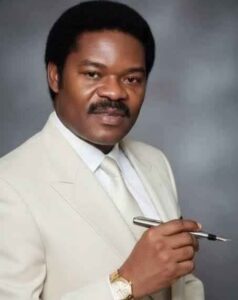
In Ekiti-State, one name that deserves recognition in this regard is Professor Rasaki Ojo Bakare, a renowned cultural practitioner, choreographer, festival director and scholar whose contributions have helped shape the development of cultural festivals and tourism all over Nigeria and in many countries of the world.
Before an analysis of his contributions to Ekiti State Cultural development, it is important to share a summary of his resume so as to understand his person.
CITATION.
Playwright, Performance Director, Professor of Choreography and Performance Aesthetics, and Fellow of the Nigerian Academy of Letters (the highest academic recognition in the humanities), Prof Rasaki Ojo Bakare was born in Aramoko-Ekiti, Nigeria, in 1964. After his secondary education in 1981, he went for theatre apprenticeship under Jimoh Aliu and Hubert Ogunde before proceeding for higher education earning a National Certificate in Education in 1985, Bachelors of Arts in Theatre Arts in 1989, Masters of Arts in Playwriting and Play Directing in 1991 and a Doctor of Philosophy (Ph.D) in Dance and Choreography in year 2000.
The first Professor of Dance in West Africa began his career as a Graduate Assistant in 1990 and rose through the ranks to become a Senior Lecturer in year 2000, an Associate Professor in 2005 and full Professor in 2011.
He was Scholar- in-residence at the University of West Indies, Edna Manley School of Performing Arts and National Dance Theatre Company, Jamaica in 2003. Also, through a grant from PASMAE and UNISA, Prof Bakare was in University of Pretoria, South Africa as a team leader in a collaborative research on African Musical Arts Education in 2003.
He was a member of the Teaching Artists Research Group, Oslo, Norway, 2013 and the Carnival Research Roundtable, Trinidad and Tobago, 2012.
Prof Bakare has also benefited from research and workshop grants provided by Fords Foundation, MacArthur Foundation, SWAAN, UNFPA, C4C,NCWS, and NPTA.
Prof. Bakare has over 70 academic publications in peer reviewed journals across the globe while 15 of his written Plays are also published.
His Creative works have represented Nigeria in international competitions, winning trophies and medals for the country.
Some of them are Friendship International Festival, North Korea, 1997, Afrika- in Tyrol Festival, Austria, 1999. Africa Peace Tour, Mozambique, 2002, Gauteng Carnival, Soweto, South Africa, 2010, World Festival of Arts and Crafts, India, 2023, World Festival of Arts and Crafts, India, 2026.
He was a leading member of Nigeria’s contingent to Cervantino Theatre Festival, Mexico in 2001.
Prof Bakare was Choreographer, Gambia National Troupe, 1994- 1996, Head of Drama, National Troupe of Nigeria, 2001, and Artistic Director/ CEO Nigeria National Carnival, Abuja, 2009-2013.
Among his over 200 directed performances are three presidential inauguration command performances: Jagunmolu,1999, Voyage, 2007 and Langbodo, 201 1.
He also directed the performances of the opening and closing ceremonies of National Sports Festival, 2004, NUGA 2009, Nigeria Police Games 2016 and supervised the performances of the opening and closing ceremonies of FIFA U-17 World Cup 2009.
A member of International Dance Council (CID), UNESCO, Member, National Academy of Letters, Fellow. Society of Nigerian Theatre Artists, Fellow, Theatre Arts (NANTAP), Fellow, Dance Guild of Nigeria, and Fellow, Association of Dance Scholars and Professionals of Nigeria, Prof Bakare was Dean, Faculty of Humanities and Social Sciences 2013 to 2015).
Dean of Faculty of Arts( 2015- 2017), and Dean, School of Postgraduate Studies, ( 2017- 2019) at the Federal University, Oye-Ekiti.
A recipient of Ekiti State Merit Award( 1997), Ekiti State Cultural Ambassador (2013), National Cultural Ambassador, 2024 and over two hundred other awards both nationally and internationally, since 2019, Prof Bakare has been Ekiti State Commissioner for Arts, Culture and Creative Economy , and Chairman, Forum of State Commissioners of Arts, Culture, Tourism, Heritage and Creative Economy in Nigeria.
His propounded theory of African Theatre famously known as Performative Trinity attracted 60 chapters from over 70 Schorlaly contributors in a London published book in 2024.
A 70-chapter precursor of this was published 2014 completely devoted to his works and theory.
His wife, also a Professor, is Dean of a Faculty while two of his children are University lecturers and Film Directors with the third being a practicing lawyer.
His influence on Ekiti’s cultural tourism landscape can be examined through two significant developments: the establishment of the Ekiti State Festival of Arts and Culture (EKIFEST) in 2012 and the transformation of Aramoko-Ekiti Day into the Aramoko Festival (ARAFEST) in 2016.
EKIFEST: A Cultural Initiative Born in 2012.
EKIFEST was established in 2012 during the first term in office of former Ekiti State Governor, Dr. John Kayode Fayemi (JKF).
Professor Bakare subsequently became the permanent chairman of EKIFEST, bringing his expertise in choreography, carnival organisation, performance direction and cultural programming to the festival’s development as he personally wrote and submitted the proposal to the Ekiti-State government.
Under his professional influence, EKIFEST provided a platform for celebrating Ekiti’s cultural heritage, discovering young talents, encouraging community participation and connecting arts and culture with tourism and economic development.
ARAFEST: The Transformation of Aramoko-Ekiti Day
Another important chapter unfolded in Aramoko-Ekiti in 2016, when the community’s traditional Aramoko-Ekiti Day celebration was transformed into the Aramoko Festival (ARAFEST) following consultations with Professor Bakare, who was then the Director-General of the National Carnival in Abuja.
The reimagining of Aramoko Day reflected an ambition to move beyond a conventional community celebration and create a structured cultural festival capable of showcasing the town’s identity, history, traditions and creative potential.
ARAFEST introduced a broader festival format featuring carnival displays, indigenous performances, music, cultural exhibitions, pageantry and community participation.
Aramoko’s traditional quarters — Isasa-Ijowa, Anaye-Ikunato, Oke-Oja and Isao — became part of the community’s cultural storytelling, providing opportunities to celebrate local identity and bring residents and visitors together.
The transformation demonstrated that a community celebration could become a cultural attraction, heritage could become an experience, and local identity could become a tourism asset.
Connecting Community Heritage with Statewide Cultural Tourism values.
Although EKIFEST and ARAFEST emerged at different times and on different scales, both reflect an approach to cultural tourism development that Professor Bakare helped advance: identifying cultural tourism assets, presenting them through compelling experiences and creating opportunities for performers, artisans, entrepreneurs and communities.
EKIFEST offered a statewide platform for arts and cultural expression, while ARAFEST illustrated how a traditional community celebration could be reimagined as a professionally organised festival.
The EKIFEST experience has featured activities such as cultural carnivals, traditional performances, local-government exhibitions, cuisine competitions, traditional games, fashion, poetry, music and creative showcases.
Together, these activities demonstrate how festivals can develop into cultural ecosystems that connect artists, entrepreneurs, communities and visitors.
Cultural tourism as an Instrument of Economic Development
One of the central ideas associated with Professor Bakare’s approach is that arts, culture, tourism and creative economy should not be separated from economic development.
Festivals can create opportunities for local businesses, hospitality providers, fashion designers, musicians, performers, food vendors, artisans and other creative entrepreneurs.
They can also help young people develop their talents and give communities platforms to showcase their products and cultural resources.
This philosophy is evident in the potential of both ARAFEST and EKIFEST.
At the community level, ARAFEST provides a framework for presenting Aramoko’s cultural identity through a structured festival. At the state level, EKIFEST offers a broader platform for showcasing Ekiti’s diverse traditions and creative industries.
The underlying principle is straightforward: identify the culture, document the heritage, package the experience, engage the community, attract visitors and create economic opportunities.
When properly planned and promoted, festivals can support cultural preservation while contributing to tourism development and local livelihoods.
Festivals as Tourism Products
Perhaps one of the most important lessons from the development of ARAFEST and EKIFEST is that culture can become a compelling tourism product when it is made accessible and experiential.
People travel not only to visit but to read a community’s history also to experience its music, food, dance, crafts, stories and traditions.
A well-organised festival gives visitors a reason to spend time in a destination, interact with its people and uncover attractions they might otherwise overlook.
For Ekiti-State, this creates opportunities to connect cultural festivals with waterfalls, mountains, warm springs, caves, historical landmarks, traditional crafts and other tourism assets.
Visitors attending EKIFEST have always been encouraged to explore destinations across the state, while ARAFEST has served as an entry point for und
covering Aramoko-Ekiti’s history and community life.
This is how cultural programming can complement destination marketing and strengthen the tourism economy.
Recognising the Wider Contribution
The development of EKIFEST and ARAFEST has depended on the contributions of government officials, traditional rulers, community associations, artists, cultural workers, organisers and indigenous participants.
Nevertheless, Professor Bakare’s professional contribution deserves specific recognition. His experience in festival management, choreography and carnival production helped connect cultural preservation with public entertainment, community participation and tourism promotion.
His subsequent service as Commissioner for Arts, Culture and Tourism, and later in the arts, culture and creative economy portfolio, added a public policy dimension to his longstanding engagement with the sector.
A Legacy Beyond Government
Professor Bakare’s contribution can be understood through an enduring idea: culture is not merely something to remember; it is something to nurture, document, curate, promote and preserve.
EKIFEST, established in 2012 during Governor Fayemi’s first term, provided a statewide platform for cultural expression.
ARAFEST, created in 2016 following consultations with Bakare, demonstrated the potential of transforming a community celebration into a structured festival.
His subsequent role as permanent chairman of EKIFEST further established his place in Ekiti’s festival history.
The story is not that ARAFEST created EKIFEST, but that Professor Bakare contributed to two important dimensions of Ekiti’s cultural development: the institutional growth of a statewide festival and the transformation of a traditional community celebration into a tourism-oriented cultural experience.
EKIFEST provided the statewide platform. ARAFEST demonstrated the possibilities of community-based cultural transformation. Professor Rasaki Ojo Bakare helped connect these two chapters in the development of cultural tourism in Ekiti State.
That contribution deserves to be documented as part of the history of modern arts, culture and tourism in Ekiti.
The concept preparing for the future.
Ekiti-State Performing troupe company was also created to run an independent commercial service that will outrun his performance eventually outside been a commissioner, the group was established in 2022 and since have represented Nigeria in 4 countries with over 10 Ekiti-State indigens present at the performance after winning the presidential favour to perform at “Aso Rock”, the troupe company has won several awards in and outside Nigeria for Ekiti-State and Nigeria.