
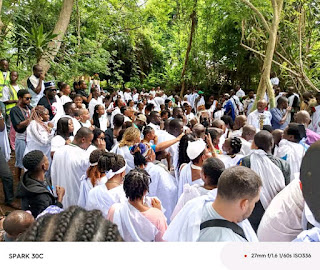
WORLD IFA PILGRIMAGE: HOW A PRIVATE INITIATIVE IS POWERING CULTURAL TOURISM IN EKITI
Over the past decade, Ekiti State has been quietly positioning itself on the global cultural tourism map—not through mass leisure resorts or theme parks, but through something far older and deeper: cultural identity.
At the centre of this shift is the World Ifa Pilgrimage, a privately driven cultural initiative redefining how heritage tourism can be developed in Nigeria.
Unlike many tourism events that depend heavily on government coordination, the World Ifa Pilgrimage is largely promoted and organized by private cultural and faith-based institutions, working closely with traditional custodians, domesticated tour operators, indigenous practitioners, and host communities.
This approach places cultural ownership in the hands of practitioners while opening Ekiti’s heritage to a global audience.
Reframing Spiritual Heritage as Cultural Tourism
The pilgrimage centres on Ifa, the Yoruba system of divination and philosophy, and reverence for Orunmila, regarded as the custodian of wisdom. Sacred sites across Ekiti—particularly Oke Olota in Ado-Ekiti, believed by adherents to be an ancestral home of Orunmila—serve as focal points for rituals, teachings, and cultural exchange.
By structuring these spiritual and cultural practices into an organized annual pilgrimage, private organizers have transformed ancient traditions into a formal cultural tourism experience. Visitors do more than observe; they engage in lectures, ceremonies, storytelling, music, processions, and community life, gaining an immersive understanding of Yoruba cosmology.
A Global Pull, Rooted Locally
One of the pilgrimage’s most notable impacts is its international appeal. Participants travel from across Nigeria, Africa, the Caribbean, the Americas, and Europe, with many from the Yoruba diaspora seeking ancestral reconnection.
This steady flow of visitors has repositioned Ekiti as a spiritual homeland and pilgrimage destination, strengthening its cultural presence beyond state and national borders.
Despite its global reach, the initiative remains deeply community-centred. Local priests, drummers, cultural guides, artisans, food vendors, and performers play essential roles, ensuring that cultural authority and economic benefits remain within host communities.
Economic Value Beyond Ritual
As a privately driven tourism product, the World Ifa Pilgrimage delivers tangible economic benefits.
Hotels and guesthouses record increased patronage, transport operators and caterers experience higher demand, and creatives, media professionals, and small traders benefit from seasonal tourism activity.
Indigenous crafts, traditional attire, books, and local cuisine find new markets, while cultural knowledge becomes an economic asset rather than a fading memory.
This model demonstrates that belief-based tourism can be economically viable without compromising authenticity or spiritual integrity.
Preservation Through Participation
Beyond economics, the pilgrimage plays a vital role in cultural preservation.
Rituals are documented, oral histories shared, and younger generations exposed to traditions often marginalized in modern discourse.
By presenting Ifa spirituality in a dignified and international context, private organizers also challenge long-standing misconceptions about African indigenous religions.
A Model for Cultural Tourism Development
The World Ifa Pilgrimage shows that private organizations, when rooted in culture and community, can successfully drive sustainable tourism development.
As global travelers increasingly seek meaning and authentic experiences, Ekiti State’s World Ifa Pilgrimage stands as a powerful example of how Africa’s ancient traditions continue to fuel cultural and economic renewal.
Ogbeni Babajide Fajuyi
Writes from Igbemo-Ekiti