Oluyede Momentum Builds as Ekiti Voters Seeks Real Change
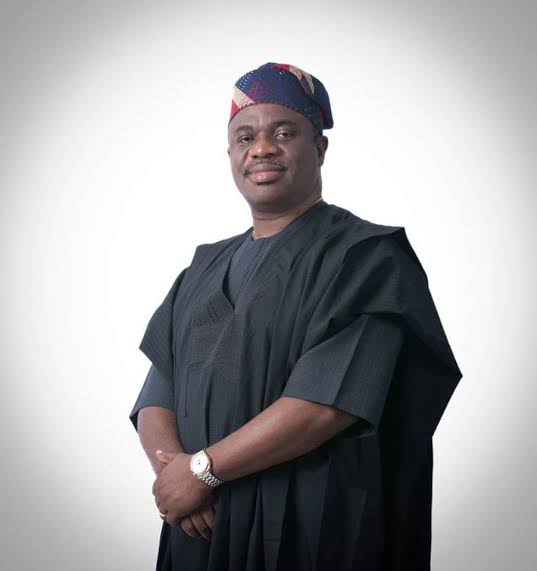
As the political landscape in Ekiti State continues to evolve ahead of the June 20, 2026 governorship election, one development has become increasingly difficult to ignore: the steady and growing momentum behind the candidacy of Dr. Oluwole Oluyede of the Peoples Democratic Party (PDP).
What began as a quiet emergence has now transformed into a widening wave of public interest, political engagement, and grassroots conversation about the future direction of the state.
Across local governments, wards, and communities, the mood among many voters is shifting from passive observation to active expectation. The central question dominating discussions is no longer about party loyalty alone, but about performance, capacity, and the urgent need for real change. In this atmosphere, Oluyede’s candidacy is gaining attention as a symbol of possible renewal.
Ekiti State, often celebrated for its intellectual heritage and strong civic awareness, is once again demonstrating that its electorate is deeply sensitive to governance outcomes. Years of recurring challenges, ranging from youth unemployment to infrastructure gaps and limited economic expansion, have created a strong appetite for a new direction. Many citizens believe the state has not fully maximized its potential, especially in areas such as agriculture, education, and small business development.
It is within this context that Oluyede’s message appears to be resonating. His campaign narrative, centered on practical governance and development-focused leadership, is gaining traction among different segments of the population. From young graduates seeking job opportunities to traders and artisans calling for better economic conditions, the appeal for change is cutting across social and economic lines.
A key factor driving this momentum is perception of readiness. Supporters and observers alike point to Oluyede’s structured approach to governance issues, particularly his emphasis on economic revitalization through agriculture and enterprise development. His position that Ekiti can become a self-sustaining economy if properly managed has sparked conversations around industrialization, value chain development, and rural empowerment.
In many rural communities, where development often feels slow and uneven, these ideas are receiving increasing attention. Farmers and small-scale producers are especially interested in policies that would improve access to markets, provide modern farming support, and encourage agribusiness investments. The belief is growing that Ekiti’s economic future may depend on leaders who can bridge the gap between policy ideas and practical implementation.
Education also remains a major reference point in the current political discourse. Ekiti has long prided itself on academic excellence, but stakeholders have raised concerns about infrastructure decay, funding constraints, and the need to align learning outcomes with modern economic realities. Oluyede’s reform-oriented messaging around education, focused on modernization, teacher support, and technology integration, has become part of his broader appeal to families and educators.
Healthcare delivery, especially at the primary level, is another area frequently mentioned in community discussions. Many residents continue to express concern about accessibility, staffing, and the quality of services in local health centers. The growing expectation is for leadership that prioritizes healthcare as a fundamental right rather than a secondary policy area.
Beyond policy positions, however, political analysts note that Oluyede’s rising momentum is also being shaped by public desire for a more participatory style of governance. Voters increasingly want leaders who are accessible, responsive, and attentive to grassroots concerns. This demand for inclusiveness is influencing how campaigns are being evaluated, with greater emphasis on engagement rather than rhetoric.
The PDP candidate’s increasing visibility across political gatherings, civic engagements, and community interactions has contributed to a perception of accessibility. This is reinforcing the idea among supporters that leadership should not be distant from the people it serves. As the election draws nearer, this factor may become even more significant in shaping voter sentiment.
At the same time, the broader political environment in Ekiti is becoming more competitive and issue-driven. The electorate is more informed, more vocal, and more demanding than in previous election cycles. Social media platforms, town hall engagements, and local discussions are amplifying conversations around governance performance and future expectations.
In this evolving environment, momentum is not just about popularity, it is about perception of credibility, clarity of vision, and the ability to inspire trust. Oluyede’s campaign is increasingly being framed within this dynamic, as more voters begin to assess candidates based on what they represent for the future rather than what they represent in the present political structure.
Still, political observers caution that momentum in an election cycle is fluid. It must be sustained through consistent messaging, policy clarity, and continued engagement with the electorate. As June 20, 2026 approaches, campaigns across all parties are expected to intensify, with greater focus on debates around development priorities and governance strategies.
For now, however, one reality stands out: the conversation in Ekiti is changing. The electorate is asking different questions, demanding clearer answers, and showing greater interest in alternatives that promise tangible progress. Within this shifting political mood, Oluyede’s candidacy has become a focal point of attention.
Whether this momentum translates into electoral success will ultimately be decided at the ballot box. But what is already evident is that Ekiti’s 2026 election is shaping up to be one of the most issue-driven and competitive in recent memory.
And in that unfolding story, Oluyede’s momentum is no longer just a campaign narrative, it is becoming a reflection of a wider desire for real change across Ekiti State.