THE INK GENERALS: JUNE 12’S FORGOTTEN ARMY
By Oloroogun Sola Ajisafe
When Nigeria remembers June 12, 1993, the names that roll off the tongue are Abiola, Kudirat, Fawehinmi, Soyinka, Falana, Kokori. Guardian, Tribune, Punch, TheNews, etc. The politicians who refused to concede, the activists who took the bullet, the lawyers who argued in courtrooms, the newspapers closed down, and the editors detained. Their courage is documented, their faces on stamps and souvenirs, their sacrifices honored every Democracy Day.
But there was another front in that war. No cameras. No microphones. No protection. Just ink, paper, and the stubborn refusal to let a military junta kill the truth.
They were the Ink Generals.
CityNews and the Invaded Newsroom
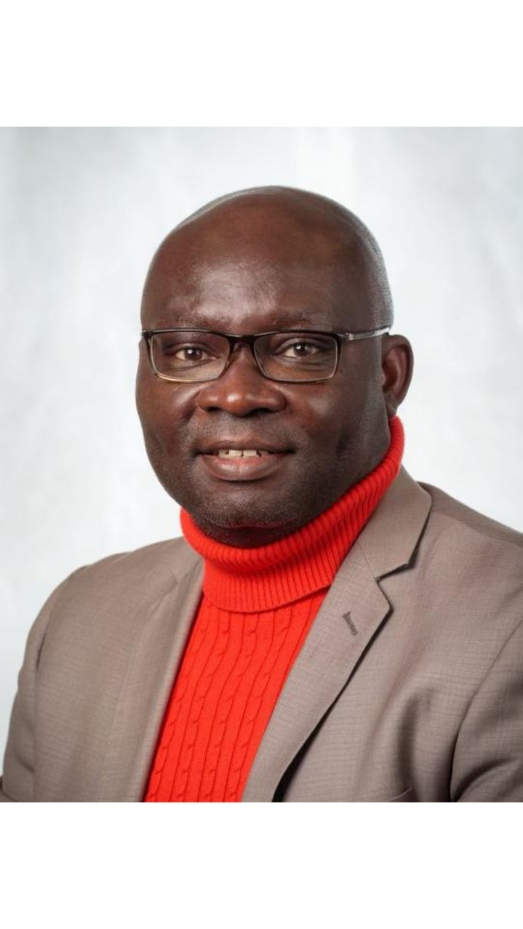
One of them was Ohens, Editor-in-Chief of CityNews, a weekly newspaper that the Babangida/Abacha despotic regimes considered more dangerous than an armed uprising. The owner was Dr. Victor Vanni (also known as Chief Victor Ojie Imiavanni) from Igueben in Edo State. CityNews didn’t break stories with press releases. It broke them by ambush.
“We had no office after the Abacha military junta invaded and occupied number 4-6 Ojie Imiavanni Street, Off Oregun Road, Ikeja. Ohens recalls: “The streets became our newsroom. Every corner shop became our editorial room. Okada riders were not prevalent then but we made use of some of them as couriers, and some random _bukas_ as collection joints”.
Under the bridge on Awolowo Way, Ikeja. On Adeniyi Jones. Inside Computer Village, on Agege Motor Road, inside buses going to Ikeja or Oshodi Oke, or Trade Fair Complex, or National Stadium, Surulere. Down in my one room (face me I slap you) at 90, Dopemu/Agbotikuyo Road, Alhaja Odere Sifau Bus Stop in Dopemu-Agege, that’s where reporters swapped notes, where sub-editors worked by torchlight, where bundles of fresh copies changed hands under scorching sun or before dawn.
CityNews became the King of underground, guerilla publishing. It survived raids, arrests, and intimidation because it refused to have a fixed address after the invasion.
The Teacher Who Became a Radical
At the center of that network was Joseph Adonor Oligbenga Ohens, a young man who traded a chalkboard for a typewriter. A teacher by training, Ohens left the classroom to study Journalism at the Nigerian Institute of Journalism, Ogba, Lagos. He was the son of a retired police man who lived most of his life in Ibadan and Kaduna and had returned to his hometown of Opoji in Esan, Edo State to discover his roots. Ohens attended Annunciation Catholic College, Irua, Edo State before coming to Lagos to “make meaning of his life.”
While at NIJ, Ogba, he championed a radical, subterranean campus publication organization called the Mirror Group. The group’s publications skewered randy lecturers, absentee lecturers, and the anti-student antics of the school’s management led by the versatile journalist turned Journalism Administrator, Chief (now Professor) Dayo Duyile from Ondo town. Every morning, at the Nigerian Institute of Journalism, there was always a new opinion piece under the pen name *“The Naked Hen.”* It was Ohens’ first taste of underground publishing and he brought that same defiance to the June 12 struggle.
As Editor-in-Chief, Ohens recruited and hired many alumni of the Nigerian Institute of Journalism, and somehow, I became what Peter was to Jesus Christ. I enmeshed myself in the struggle for democracy and followed my Editor to wherever he went. I stayed committed even when the heat from the military became unbearable to many. My editor once told me, “Sola, I don’t know what I saw in you except fire and the will to go on, no matter what”. I said to him “maybe I was a fool who met and aligned with bigger fools, fighting for a foolish society.” As much as I can recall, this is the year of our Lord 2026. That “fool” of 1993 is still a fool today and may never change from being a fool whose faith in democracy and good governance is unbreakable.
From Hope ’93 to the Streets
Ohens snapped me from NIJ, Ogba with the assistance of Chief Duyile the Director of the School. That’s how I found myself attached to *Hope 93*, MKO Abiola’s campaign headquarters in Ikeja. I couldn’t tell if I was a reporter or a protester when the election was annulled and “Kasala burst”. I just knew I was seeing history with my own eyes and that someone had to write it down.
While Abacha’s goons hunted activists in broad daylight, the Ink Generals moved in shadows, with duffel bags of newspapers instead of placards.
“Anyhow Sir” Printing Presses
Printing was the riskiest part. Big, established presses wouldn’t touch CityNews. So, the Ink Generals found allies in unlikely places.
Toyin Street, Ikeja, where the resuscitated Nnamdi Azikiwe West African Pilot was located, sometimes printed our front and back pages but later rejected us when the heat became too much. The inside pages? We took them to ‘Anyhow Sir’. That is, any small printer brave enough to say “yes”. They were many, so we alternated them. Sometimes, one edition, we may distribute it among three to four printers. We may in some situations print two front and back pages.
Punch and Vanguard while maintaining public neutrality, quietly sympathized. A nod here, a delayed delivery there. In a climate of fear, that was solidarity. We borrowed money to buy newsprint when the publisher was not ready to fund us any longer but unwilling to close shop, he asked us to ” fend for ourselves”.
In 1993 during the June 12 struggle, Bola Bolawole was the Editor of The Punch daily newspaper. He was detained in his own office for three days. He was also detained during the June 11, 1994 raid on Punch premises on the eve of the first June 12 anniversary. Bola Bolawole was running the newsroom as Editor in 1993 and bore the brunt of the Abacha regime’s clampdown on the paper.
The Names You Won’t Find in Textbooks
June 12 will always belong to Abiola. But it also belongs to the distributor who hid CityNews copies under vegetables in Oyingbo Market, Dopemu Roundabout, Pen Cinema in Agege, Ikeja and every crevice on the streets. To the printer who lost his shop to SSS seizure. To the editor who slept in different houses every night. To the drivers who hid our papers to get to every part of the country in other to get it to vendors. To the drivers of other media organisations who “mixed ” City news with his own newspapers to escape scrutiny.
They will likely never get a national award. Their names won’t be in textbooks. But without them, the June 12 story is incomplete.
Because dictatorships don’t just jail politicians. They banish the truth. And it took Ink Generals like Adonor (a local Esan name which means *”he who mends”*) to smuggle it back onto the streets.
Epilogue
Today, democracy is messy, imperfect, and often frustrating and filled with sullied bastards like David Mark and the rest who actually annulled June 12. Our democratic space encouraged betrayers and turncoats like Dr. Jonathan Zwingina who took me under his protective arms at Hope 93. It accommodated elements like Alhaji Babangana Kingibe who during a rare interview at his Ikoyi home puffed so much cigarette smoke into the room that could last a whole generation. My two other colleagues, Egbulefunand Akinlabi were smokers like him. I was the only non smoker. I inhailed so much smoke that day that my lungs almost came out and for three weeks I was out of circulation.
Each time I remember Kingibe, Zwingina and Chief Ebenezer Babatope (whose Chamber somewhere around Oshodi was like a second home to me), I felt a personal loss and humiliation for their abandonment of a sacred pledge and their insincerity to a noble cause.
Furthermore, June 12 exists because a group of journalists decided that silence was not an option; even when their offices were sealed and their papers and printing presses forced to go underground. We were not alone and CityNews was not the only underground press. Fayemiwo was involved in his own thing. When arrested he was tied to the fan and hung on it in a dungeon inside an SSS facility in Lagos. He eventually lost his sanity. Another journalist lost his sight and his life after been detained for over three years in a dungeon by Abacha goons.
Introducing Ohens Adonor Olugbenga Joseph of today
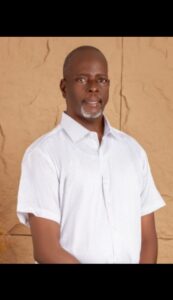
When the dust of the annulment refused to go, we made other plans. I went to LASU to study law while Ohens went into business. Later he followed.mwnto LASU and I took him under my wings. I bosed my Boss. After LASU he relocated to America while I stayed here to continue the struggle. Today, Ohens holds the following, LL.B LASU, LL.M & JSD Ph.D, U.C. Berkeley Law, Former Adjunct Professor, Senior VP, Healthcare Law, California North Coast Health System, Global President, ACCIOBA
To Joseph Adonor Oligbenga Ohens, who led us at CityNews with courage, to every reporter who walked from one street corner to the other to deliver on deadline on an empty stomach, to every unnamed distributor and “Anyhow Sir” printer, to every driver and to every reader of CityNews; this is your citation.
You fought with ink. And you won.
Oloroogun Sola Ajisafe was a Senior Features Reporter with CityNews and was at the thick of the struggle as long as it lasted.