
CLIMATE CHANGE: DON ADVOCATES SCIENCE-DRIVEN SOLUTIONS, NATIONAL BUILDING CODES REVIEW
…As Prof Oyenike Eludoyin Delivers AAUA’s 68th Inaugural Lecture
A Professor of Climatology at Adekunle Ajasin University, Akungba Akoko, Oyenike Mary Eludoyin, has identified climate change as an escalating threat to environmental sustainability and public health, urging stronger institutional commitment and science-driven interventions to mitigate its impacts.
She also stressed the urgent need for Nigeria to invest in innovative and adaptive approaches to address rising heat waves and evolving climate conditions in order to mitigate their impacts on agriculture, food security, and public health in pursuit of sustainable development in the country.
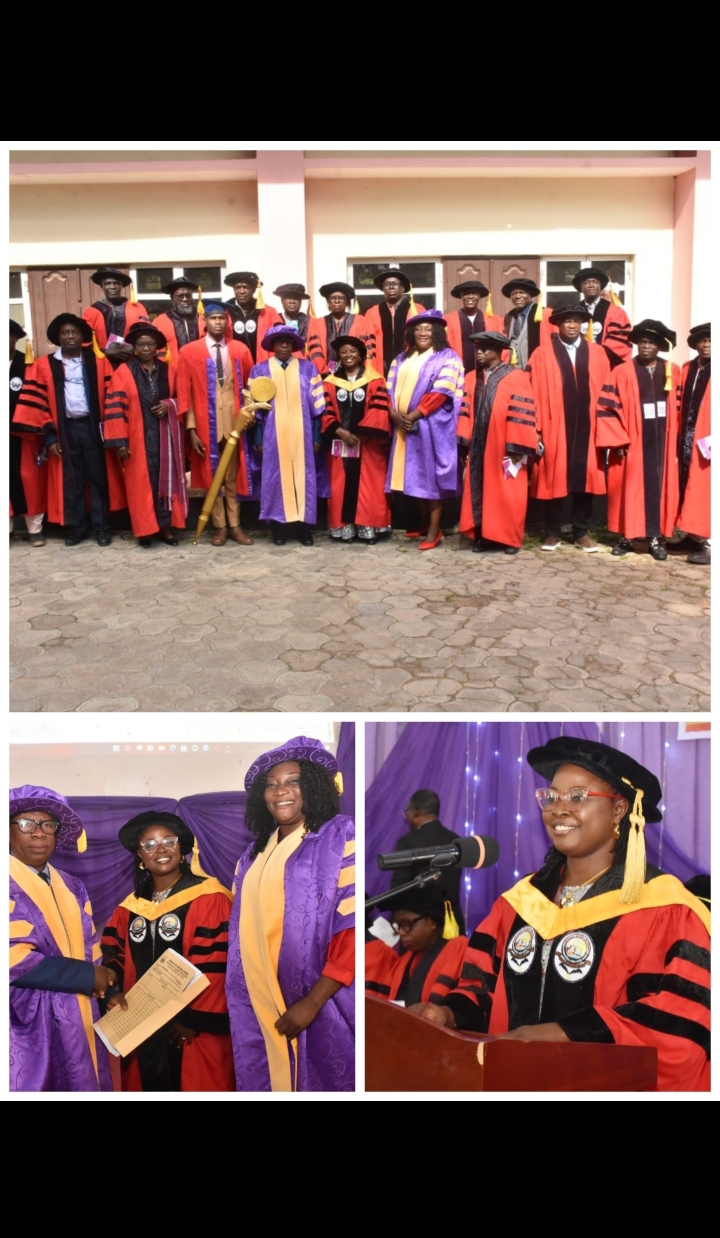
Prof. Eludoyin made these assertions on Tuesday, August 4, 2026, while delivering the University’s 68th Inaugural Lecture, titled, “The Human Element in the Climate Equation: Navigating Thermal Stress and Environmental Health in a Warming Nigeria.”
While also describing the temperature level experienced in the country as a silent and invisible biological crisis, she warned that prompt actions must be taken to avert its debilitating effects saying, “Nigeria must move swiftly from a passive posture of ‘climate victimhood’ to an active stance of ‘climatic agency’.”
Highlighting the increasing severity of climate change and its implications for human well-being, the renowned climatologist observed that the earth’s atmosphere has become warmer, heavier, more saturated, and increasingly unpredictable, reflecting the profound effects of global climate change.
She said, “The global climate is warming at a pace that severely outstrips our current infrastructural capacity. Concurrently, our local Nigerian environment is becoming more humid, less ventilated, and progressively stressful to biological life.”
She noted that her decades of scientific investigations consistently revealed a steady rise in temperature with far-reaching consequences for ecosystems, livelihoods and public health across Nigeria and the world.
Drawing on her academic journey, Prof. Eludoyin stated that the most profound discovery from her years of research was not merely the evidence of rising temperatures but the remarkable capacity of people to adapt and thrive when empowered with scientific knowledge and practical solutions to environmental challenges.
She stressed that addressing climate change requires stronger institutional commitment, strategic collaboration and sustained investment in scientific research.
She advocated an enduring partnership between the University, described as ‘the gown,’ and the wider society, ‘the town,’ to ensure that research findings are translated into practical policies and interventions capable of improving the quality of life.
Outlining practical strategies for confronting the climate crisis, the inaugural lecturer called for what she described as an “Architectural Revolution” through a comprehensive review of Nigeria’s National Building Codes to incorporate bioclimatic principles.
She noted that the country’s growing dependence on imported concrete-and-glass building designs fail to account for Nigeria’s tropical climate, natural ventilation patterns and intense solar radiation.
She identified the high temperature conditions as a localised phenomenon not evenly distributed across the country, adding that high-density residential zones, commercial hubs, and paved core of the cities with minimal green spaces prevent efficient ventilation compared to the vegetated outskirts of cities and densely populated towns.
The Don further stated the numerous effects of this environmental challenge, including the farmer’s burden where labourers in certain areas are hindered from working in peak solar hours, compromising regional food security and livelihood of agrarian families; sleepless nights from high nocturnal temperatures resulting in public health crisis; and the economic drain on citizens due to the rising financial cost of artificial cooling, and the loss of physical productivity in its absence which further deepens the cycle of climate-induced poverty marginalisation cycle among households.
She said “We must pioneer a national cool-roof policy mandating high-albedo, solar-reflective materials to replace heat-trapping corrugated iron sheets, an intervention proven to lower peak indoor temperatures by three to five degrees Celsius and eliminate nocturnal heat entrapment.”
Prof. Eludoyin also advocated the deployment of precision agriculture to support smallholder farmers whose traditional farming calendars have been disrupted by increasingly unpredictable rainfall patterns.
She proposed that regional universities should serve as institutional climate hubs, providing timely climate information and scientific support to farming communities.
In addition, she emphasised the need to cultivate what she termed “Urban Green Lungs” by mandating the preservation or development of high-canopy indigenous forest zones covering at least 10 per cent of all new residential, commercial and industrial layouts.
Such measures, she explained, would help mitigate the Urban Heat Island effect and improve environmental health.
The Inaugural Lecturer further called for the establishment of robust climate-health surveillance systems, describing climate change as fundamentally a public health crisis that demands coordinated action by environmental, health and policy institutions.
She advocated the establishment of a Climate Change Centre at Adekunle Ajasin University to institutionalize climate change research, strengthen evidence-based policy engagement, and enhance the University’s capacity to develop sustainable strategies for protecting vulnerable communities from the adverse impacts of climate change.
Earlier in his remarks, the Vice Chancellor, Prof. Tomola Obamuyi, welcomed guests to the inaugural lecture and reaffirmed the University’s commitment to promoting scholarship, cutting-edge research, and knowledge-driven initiatives that contribute meaningfully to national development and societal progress.
Prof. Obamuyi promised to sustain Inaugural Lecture as a core component of University programme in line with Global Best Standards.
The 68th Inaugural Lecture, the first under the chairmanship of Prof. Obamuyi, attracted dignitaries from all walks of life, including religious and traditional leaders, members of the academia and the University Community, as well as family, friends and well-wishers of the lecturer.