
 0
0
 0
0
AAUA DON OLONISAKIN CALLS FOR ESTABLISHMENT OF BOTANICAL GARDENS ACROSS NIGERIA
An organic chemist at Adekunle Ajasin University, Akungba Akoko, Professor Adebisi Olonisakin has charged the government and relevant stakeholders to strengthen investment in research that explores the various known and undiscovered health and industrial potentials of plant secondary metabolites, in order for ‘Africa to evolve organic, home-grown methods of tackling health challenges if it must preserve its population and save its economy’.
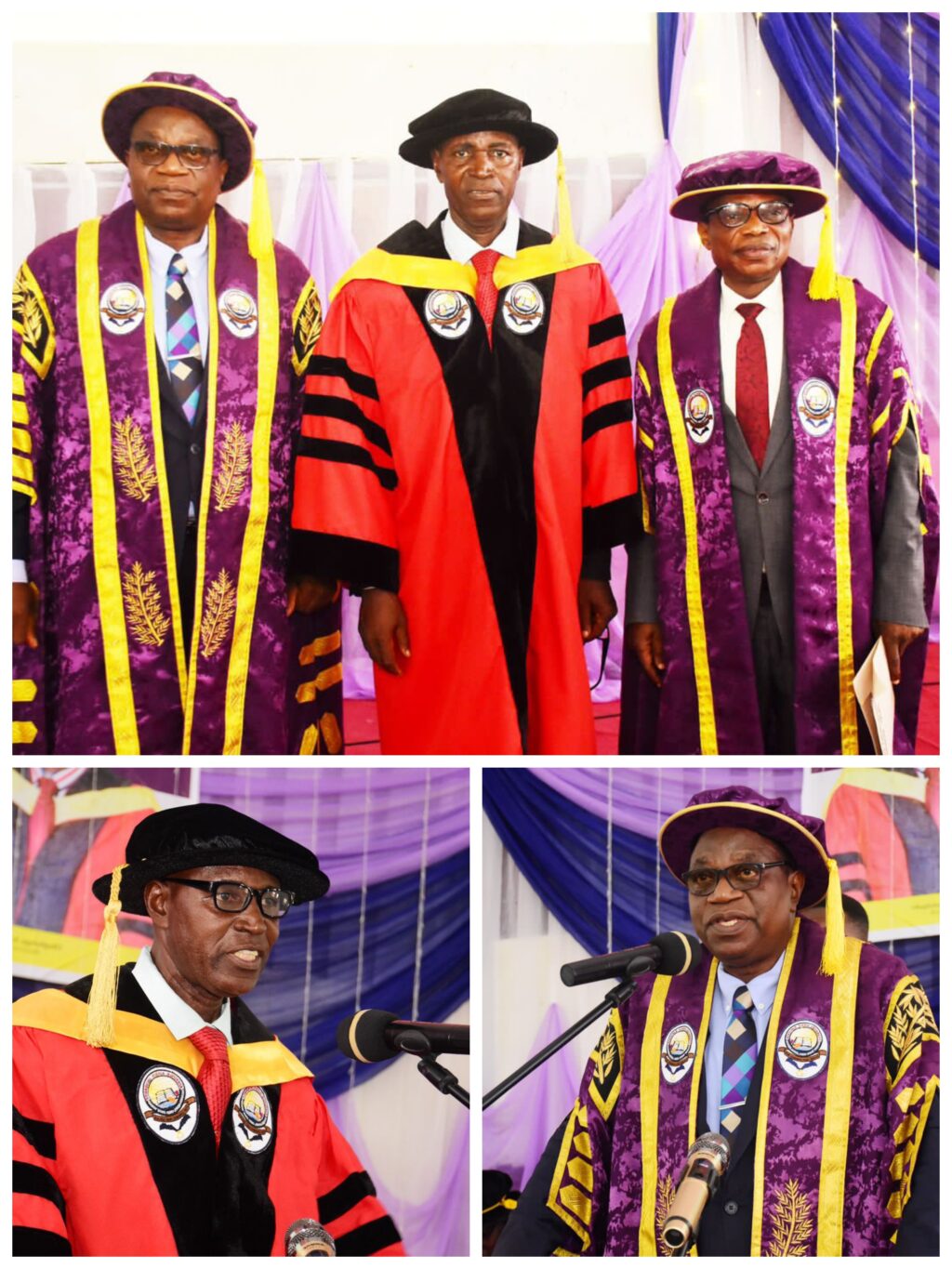
He made this call on Tuesday, March 24, 2026, while delivering the 57th inaugural lecture of the institution titled ‘Nature’s Pharmacy: Unlocking the Secrets of Plant Secondary Metabolites’.
He further advocated sustainable governance principles, encouragement of conservation efforts and clubs, establishment of botanical gardens, biotechnology research units, approval of complementary herbal medicine, and setting up of laboratory infrastructure and central analytical facilities as avenues to getting the most from nature.
Prof. Olonisakin posited: ‘Secondary metabolites are nature’s valuable compounds that have contributed significantly to human well-being, safety and economic activities.
These compounds have been a rich source of medicines, food additives, and other valuable products.
Their diverse biological activities and potential applications make them an important area of research, offering new opportunities for improving human health and quality of life.
‘The isolation of secondary metabolites from plants has led to the discovery of numerous bioactive compounds with potential applications in medicines, agriculture and other industries.
These compounds have shown promising results, making them attractive candidates for further research and development in order to uncover more of nature’s hidden treasures.’
Professor Olonisakin said secondary metabolites are natural compounds found in leaves, roots, bark and seeds of plants that protect them from insects and infection, adding that scientists study these plant chemicals to produce drugs for treating illnesses.
While affirming that nature can be seen as a pharmacy because it provides healing substances, the organic chemist urged students and researchers to pay attention to local plants, saying that Nigeria is blessed with many medicinal plants whose properties are yet to be fully discovered and utilised to help improve healthcare and boost the country’s economy.
Prof. Olonisakin noted that mosquito-borne viral diseases such as malaria continue to pose significant global health challenges with increasing resistance of mosquitoes to conventional insecticides.
This, he said, has created an urgent need for alternative vector-control strategies through further research and development of plant secondary metabolites.
He, however, stressed the need for intentional scientific research into beneficial and safe plant-derived compounds, noting that genetic and environmental factors significantly influence the efficacy and chemical composition of plant secondary metabolites.
The chemist highlighted some of the challenges associated with secondary metabolites research to include complicated extraction process, low yield of secondary metabolites in sources, compound instability, structural diversity, high-demanding purification techniques, and limitations in analytical techniques.
To address these challenges, Prof. Olonisakin called on the Nigerian government to adopt integrated management principles that include responsibility, scale-matching, precaution, adaptive management, full cost allocation and stakeholder participation.
He added that large-scale botanical gardens be established in all Nigerian states to conserve and manage useful plants effectively.
He also urged relevant stakeholders to encourage the establishment of conservation awareness and clubs from primary schools to universities and across local communities.
While presenting the inaugural lecturer, the Vice Chancellor and Chairman of the occasion, Prof. Olugbenga Ige, described Prof. Olonisakin as a distinguished scholar whose work sits at the intersection of tradition and science, as well as nature and human well-being. He commended him for his unwavering commitment to solution-driven research that advances knowledge within the university and benefits society at large.


About The Author