 0
0
 0
0
AFRICA INTERNATIONAL HUMAN RIGHTS FILM FESTIVAL SET TO HOLD IN LAGOS
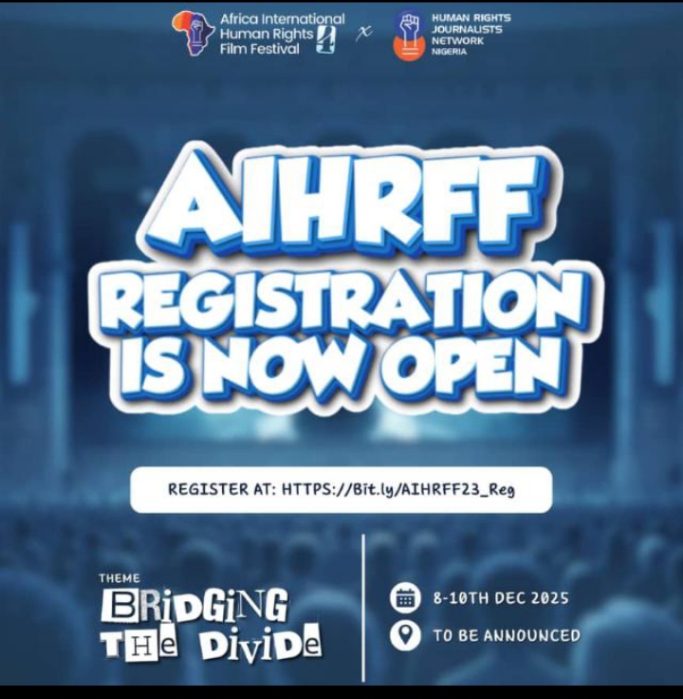
The fourth edition of the Africa International Human Rights Film Festival will hold between Monday-Wednesday, December 8-10, 2025 in Lagos.
With the theme: Using Films to Bridge Divides,” the event will feature Keynote Addresses, Film Screening, Panel Sessions, Special Appearances, and Closeout sessions.
While the opening activities, film screening and panel sessions, featuring frontline activists, Filmmakers, journalists, regulator and policymakers,would hold on Monday and Tuesday, December 8 and 9 2025 at 1A, Adekunle Owobiyi Close, Opposite Government Quarters Estate, Ogba Phase II, Lagos State, Nigeria; Master Classes and Closeout session would take place on Wednesday , December 10 at the British Council, located at 20 Thompson Avenue, Falomo, Ikoyi, Lagos, Nigeria.
The closeout session would coincide with the commemoration of the United Nations Universal Declaration of Human Rights, which is being celebrated every December 10.
Announcing the event, the Founder and Festival Director, Comrade Kehinde Adegboyega, said the event is about the biggest convergence of Human Rights activists, Filmmakers and other stakeholders on the continent, who are relentlessly lending their skills and voices to amplify multiple issues of abuses around the world.
The announcement was captured in a statement released and authored by Shakirudeen Bankole, the Communications and Strategy Lead for Human Rights Journalists Network, the umbrella body for the Africa International Human Rights Film Festival.
Adegboyega said some of these abuses include police brutality, official corruption, abuse of office, weaponisation of poverty and social amenities, Gender Based Violence (GBV), repression of freedom of expression, criminalisation of peaceful protests, censorship of free press, and authoritarianism among others.
According to the Festival Director, unlike the conventional filmmaking, the makers of Human Rights films are activists and development advocates who are helping to expose and illuminate dark places where unfathomable human rights abuses are taking place, thereby helping with evidence collection and promotion of prosecutorial justice against perpetrators.
According to him, ” audio-visual storytelling remains the most reliable and vivid way to document human rights abuses. It is self-evident, and incontrovertible. And this is why we have continued to pass down the knowledge of this trade to existing practitioners, up and coming enthusiasts and students,.so as to expand the ecosystem of civil and rights advocates through our Master Classes.”


About The Author