
 0
0
 0
0
ONDO AT 50: FROM VISION TO VELOCITY, A STATE STILL RISING
By Kikelomo Isijola
As Ondo State marks its Golden Jubilee on February 3, 2026, the milestone goes far beyond celebration for me. It is a deeply personal moment of reflection. At 47 years old, Ondo State and I have grown almost side by side. The Sunshine State is only a few years older than I am, and its evolution mirrors my own journey of learning, public service, and commitment to purposeful governance.
Ondo State was created on February 3, 1976, by the military government of General Murtala Ramat Muhammed as part of Nigeria’s historic state creation exercise. The objective was clear: to bring governance closer to the people, promote balanced development, and strengthen national unity.
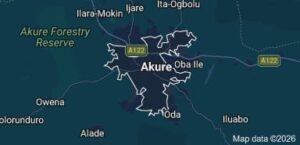
With Akure as its capital, the state emerged from the old Western Region, richly endowed with cultural heritage, fertile agricultural land, and a resilient, industrious people. For two decades, Ondo State also housed present-day Ekiti State, an experience that further strengthened its administrative depth before Ekiti’s creation in 1996.
The advent of civilian rule in 1979 ushered in one of the most defining administrations in Ondo State’s history – that of Pa Adekunle Ajasin, the state’s first elected civilian governor. Pa Ajasin governed with uncommon discipline, integrity, and ideological clarity. His administration was firmly anchored on free education, human capital development, and moral leadership.
He believed education was the most sustainable investment any government could make and pursued this vision with courage, even in the face of limited resources. Free education at all levels was vigorously implemented, producing generations of professionals who would later contribute significantly to Nigeria’s development. The establishment of Ondo State University, Ado-Ekiti (now Ekiti State University), reinforced the state’s reputation as a centre of intellectual excellence. Transparency, frugality, and accountability defined governance under Pa Ajasin, earning him a lasting reputation as one of Nigeria’s most principled leaders.
The return to democracy in 1999 marked another defining phase. Chief Adebayo Adefarati assumed office at a time when Nigerians were rebuilding trust in democratic institutions after prolonged military rule. His administration prioritised stability, democratic consolidation, and confidence-building, laying a solid foundation for governance in the Fourth Republic.
He was succeeded by Dr Olusegun Agagu, whose tenure placed strong emphasis on infrastructure development, education, and public-sector reform. Roads, schools, and public institutions received renewed attention, strengthening the state’s administrative capacity and developmental aspirations. Together, these administrations deepened Ondo State’s democratic culture and institutional framework.
About a decade ago, I had the privilege of serving as Special Assistant to Governor Olusegun Mimiko. That period remains a defining chapter in my public service journey. The Mimiko administration distinguished itself with people-centred policies, particularly in healthcare, education, urban renewal, and social welfare. It demonstrated how governance anchored on empathy and inclusion can tangibly transform lives.
For me, Akure’s growth tells the story of Ondo State’s transformation in the most personal way. I grew up around Arakale Road when it was still a single carriageway – modest, narrow, and reflective of a capital city still finding its identity. I vividly recall the dualisation of Ondo Road to NEPA Market under Governor Mimiko’s administration, a project that eased congestion, opened up the corridor, and boosted commercial activity.
Similarly, the Bourdillon Road at creation in 1976, now Oba Adesida Road, Akure was fully developed, transforming it into one of Akure’s busiest commercial and administrative arteries. Property values rose, businesses flourished, and Akure began to assume the character of a modern state capital.
The administration of Arakunrin Oluwarotimi Akeredolu, SAN, further strengthened Ondo State’s development trajectory. His tenure was marked by bold infrastructural initiatives, enhanced security architecture, and institutional reforms that repositioned the state as a strong and confident sub-national entity. His passing in December 2023 was a profound loss, but the structures he helped build remain integral to governance today.
As Ondo State clocks 50, leadership now rests with Governor Lucky Orimisan Aiyedatiwa – a man whose calm disposition and administrative depth have proven invaluable at a sensitive moment in the state’s history. Having served as deputy governor, he assumed office with a firm grasp of the machinery of government.
One of his earliest and most critical achievements was ensuring stability and continuity after a period of uncertainty. Salaries were paid promptly, projects continued without disruption, and governance remained steady.
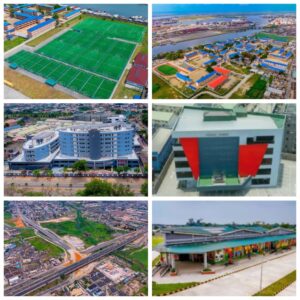
Under Governor Aiyedatiwa, Akure’s urban evolution has entered a new phase. While previous administrations opened major corridors, the current government has focused on modernising traffic management and improving urban efficiency. At strategic locations such as First Bank, NEPA Market, and the Shoprite axis in Alagbaka, obsolete roundabouts have been replaced with signal-controlled intersections, improving safety, orderliness, and mobility.
Though still a young administration, notable gains have already been recorded: strengthened security architecture restoring confidence among farmers, investors, and residents; sustained infrastructure development across all senatorial districts; agricultural growth and economic empowerment initiatives, particularly for youths and women; strong partnerships with traditional institutions; and inclusive, consultative leadership fostering labour harmony and stakeholder confidence.
Beyond policies and projects, Governor Aiyedatiwa has prioritised unity, consensus-building, and compassionate governance—qualities essential at this historic milestone.
The Golden Jubilee is therefore not merely ceremonial. It is a moment to honour past sacrifices, evaluate present realities, and deliberately prepare for the future.
Serving Ondo State under two administrations a decade apart and now as Special Assistant to Governor Aiyedatiwa on Digital Media, is a privilege I deeply cherish. From a child navigating single-lane roads to a public servant helping tell the government’s story in a digital age, my personal journey mirrors the transformation of Ondo State itself.
Fairness demands acknowledgement that every administration made its contribution: from the early military governors who laid the groundwork; to Chief Adebayo Adefarati who stabilised democracy; Dr Olusegun Agagu who strengthened institutions; Governor Olusegun Mimiko who reshaped urban development and social services; Arakunrin Oluwarotimi Akeredolu, SAN, who reinforced security and governance; and now Governor Lucky Orimisan Aiyedatiwa, who is consolidating gains while pushing new frontiers.
Each administration added something to the pot. Some added salt, some added pepper, some stirred patiently but everyone cooked.
As the Sunshine State steps into its next 50 years under the steady leadership of Governor Lucky Orimisan Aiyedatiwa, I am confident that Ondo State will continue to rise – guided by experience, strengthened by unity, and driven by an unwavering commitment to the welfare of its people.
Happy 50th Anniversary to our beloved Ondo State.
Hon. Kikelomo Isijola,
Special Assistant to the Governor of Ondo State on Digital Media and
Member, Media Sub-Committee, Ondo at 50


About The Author