FROM MESSENGER TO DEPUTY DIRECTOR: THE INSPIRING ODYSSEY OF COMRADE MICHAEL ABIODUN ONI THROUGH NIGERIA PUBLIC SERVICE
I was born in early 70’s into the family of Late Pa Oni Adelubuyan Gabriel and Late Mrs Oni Omisola of the renowned Oni Dynasty in Ilemo Quarters, Akure Kingdom.
My birth came at a time when Akure, like many Yoruba towns in southwestern Nigeria, was undergoing social transformation under the influence of postcolonial modernisation, urban expansion, and educational development, while still preserving the deep cultural foundations of Yoruba communal life.
To be born into Ilemo Quarters was, therefore, not merely to belong to a geographical location, but to become part of a historical community shaped by lineage, kinship, culture, and collective memory.
Ilemo remains one of the oldest and most respected traditional quarters in Akure Kingdom. Like other Yoruba quarters, it developed around family compounds, chieftaincy structures, and communal institutions that regulated social life long before colonial rule. The community preserved strong values of communal living, respect for elders, and cultural continuity. In those days, children were raised not only by parents but by the wider neighbourhood. The streets, compounds, moonlight gatherings, festivals, and interactions with elders formed an informal but powerful system of moral and social education.
My childhood in Ilemo exposed me to the richness of Yoruba cultural life from an early age. Traditional ceremonies, family meetings, age-grade interactions, and communal celebrations were woven into everyday existence. There was a strong sense of belonging and collective responsibility. Respect for elders was unquestioned, and discipline remained an essential virtue in child upbringing. Although many families experienced modest living conditions during the economic uncertainties of the 1970s and 1980s, the social environment was rich in communal solidarity and moral instruction.
I began my elementary education at L.A. School II, Oke Bola, Akure, in 1978 and obtained my Primary School Leaving Certificate in 1984. Public education during this period represented one of the most important pathways for social mobility in postcolonial Nigeria. Schools were not merely centres of learning but institutions that instilled in young Nigerians discipline, civic consciousness, and aspirations for a better future.
Following my primary education, I proceeded to Alakunre Comprehensive High School along Ijoka Road, Akure, where I completed my Senior Secondary School Certificate Examination (SSCE) in November 1990. My secondary school years coincided with one of the most difficult periods in Nigeria’s socioeconomic history. The Structural Adjustment Programme (SAP) introduced under military rule generated widespread hardship, inflation, unemployment, and uncertainty across the country. Like many young people of my generation, I faced financial limitations and a lack of mentorship opportunities after secondary school.
It was during this uncertain period that a turning point emerged in my life. I approached one of our respected kinsmen, the late Dr Ifedayo Daramola, for guidance. He was a senior officer in the Mass Mobilisation for Self-Reliance, Social Justice, and Economic Recovery (MAMSER), established by the Ibrahim Babangida administration in 1987 and later transformed into the National Orientation Agency (NOA) under General Sani Abacha’s administration in 1994.MAMSER represented the government’s attempt to promote civic education, patriotism, self-reliance, and national mobilisation during a period of severe economic and political challenges.
Acting on Dr Daramola’s advice and support, I applied to the organisation and resumed work on 3rdJune,1991 as a Messenger/Cleaner. Though modest in designation, the opportunity marked a significant beginning in my life journey. Within the office, I encountered senior officers who became mentors and sources of inspiration. They constantly reminded me that one’s starting point in life did not determine one’s final destination. Through their encouragement, I began to see education as a pathway to personal transformation and professional advancement.
Inspired by their guidance, I sought admission into Adeyemi College of Education, Ondo, in 1996 to study Geography/Integrated Science. Balancing work responsibilities with academic pursuits was not easy, especially within the economic realities of the period, but I remained determined. I graduated in 1999 with a National Certificate in Education (NCE) in Geography/Integrated Science. Unsatisfied with stopping there, I returned to the same institution to pursue a degree programme and later graduated with a Bachelor of Science in Education (B.Sc. Ed. Hons) in Geography, with a Second Class (Lower Division).
I owe these achievements to the grace of God and to the support of mentors and senior colleagues who believed in my future. Among them were Professor Adetoye Martins, now of the Department of Political Science, Ekiti State University, Ado Ekiti; Mr Bode Famose A.K.A Dr Lopez (now retired),Pastor Mrs Famuyiwa A.O of Agape Bible Church Akure and several others whose encouragement and practical support shaped the course of my life. Their influence reflected an older tradition within the Nigerian public service, in which senior officers served not only as administrators but also as mentors to younger employees.
With these qualifications, a major turning point occurred in my civil service career. In 2006, I was officially converted from the junior cadre to the officers’ cadre, representing the fulfilment of years of perseverance, educational struggle, and self-improvement. Following this promotion, I was entrusted with greater responsibilities within the National Orientation Agency.
From 2003 to 2009, I served as Chief Orientation and Mobilisation Officer in the Irele Local Government Area of Ondo State, where I worked closely with traditional rulers, community leaders, market women, youth organisations, religious bodies, and local government officials to promote public awareness and government programmes at the grassroots level. In 2009, I was transferred to Akoko South East Local Government Area, Isua Akoko, where I continued in the same capacity until 2012. Working within these communities deepened my understanding of Nigeria’s social diversity and reinforced my appreciation for grassroots engagement in governance and national development.
A major milestone in my career came in 2012 when I was deployed to the Press Crew of the administration of Dr Olusegun Mimiko, then Governor of Ondo State. Between 2012 and 2017, I covered the activities of the National Orientation Agency in the state, documenting and publicising programmes aimed at promoting national unity, public awareness, and civic responsibility. This role exposed me to media operations, public communication, and strategic engagement within democratic governance.
Beyond my responsibilities as a public servant, I remained committed to the development of the Akure Kingdom. During my time at Adeyemi College of Education, I served as President of the Akure Students’ Union (Adeyemi Chapter) for the 1998/1999 academic session. This experience strengthened my leadership abilities and reinforced my belief that education and community service must go together.
My commitment to community development continued through several leadership and committee roles. Between 2017 and 2022, I served as President of the Akure Divisional Federal Workers’ Association of Nigeria (ADFWAN), an association that promoted unity and developmental engagement among Akure federal workers. In 2020, I became the Maiden Chairman of the Organising Committee of Akure Sons and Daughters Home and Abroad (ASADHAA), which aims to mobilise Akure indigenes toward community development and cultural preservation.
I also participated in several important committees, including Assistant Secretary of the Relocation Committee of the National Open University of Nigeria (NOUN), Akure Study Centre (2003–2005); Committee Member on the Creation of LCDAs appointed by the Deji of Akure Kingdom in 2021; Committee Member on the Ulefunta Festival 2021 Edition; Committee Member on Census Population Mobilisation in 2021; and Assistant Secretary of the Committee on the FUTA Teaching Hospital Project between 2020 and 2022.
Looking back, my years in the National Orientation Agency represented far more than a professional career; they formed a journey of service, growth, and continuous learning. From my humble beginnings as a Messenger/Cleaner to my eventual responsibilities within the officers’ cadre and state press operations, the journey reflected the transformative power of determination, mentorship, education, and faith in God.
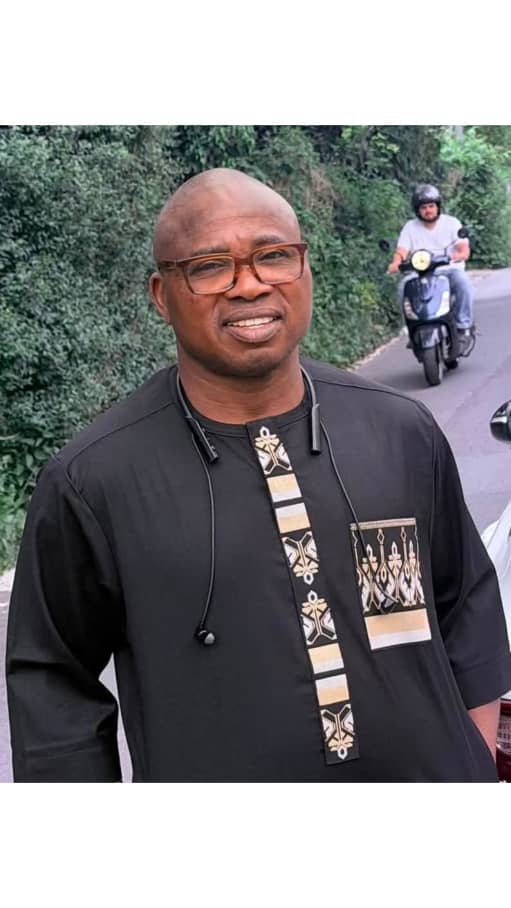
Today, 3rd June 2026, after 35 years of meritorious service in the Federal Civil Service, I retire as a Deputy Director on Grade Level 16 to the glory of God. I look forward to another phase of life as I continue to enjoy His goodness and faithfulness.
Comrade Michael Abiodun Oni
3rd June, 2026.