BOLA AHMED TINUBU: THE COURAGE OF VISION, THE DISCIPLINE OF REFORM, AND THE MAKING OF A STATESMAN
By Felix Babatunde Ale, PhD
In the life of every nation, there occasionally emerges a leader whose tenure transcends the ordinary boundaries of politics and enters the realm of history.
Such leaders are often misunderstood at the beginning, questioned in the middle, and appreciated more fully with the passage of time. Their greatness is not merely measured by popular applause but by their willingness to confront difficult realities and make decisions others fear to take.
In contemporary Nigeria, President Bola Ahmed Tinubu stands as one of such remarkable figures whose leadership continues to shape the trajectory of the nation in profound and enduring ways.
The story of Bola Ahmed Tinubu is fundamentally a story of vision, courage, resilience, strategic thinking, and an abiding faith in the limitless potential of Nigeria. From his years in public service to his emergence as President of the Federal Republic of Nigeria, he has consistently demonstrated an uncommon capacity to think beyond the immediate and focus on the future.
Throughout his political journey, one defining characteristic has remained constant: a determination to build institutions rather than simply occupy offices.
Leadership experts across the world have long argued that genuine leaders are distinguished by their ability to transform challenges into opportunities.
Warren Bennis, one of the world’s most respected leadership scholars, famously observed that “Leadership is the capacity to translate vision into reality.” Few contemporary Nigerian leaders embody this philosophy more convincingly than President Tinubu.
His rise to national leadership did not happen by accident. It was the culmination of decades of political engagement, strategic advocacy, coalition building, and a deep understanding of governance.
Long before becoming President, he had established himself as one of the most influential architects of modern democratic politics in Nigeria.
His tenure as Governor of Lagos State remains one of the most studied examples of subnational governance in contemporary Africa.
By strengthening institutions, expanding internally generated revenue, improving administrative systems, and creating foundations for sustainable growth, he demonstrated that development is not a product of chance but of deliberate planning and visionary leadership.
When he assumed office as President in May 2023, Nigeria was confronted by formidable challenges. Economic distortions had accumulated over several years, public finances were under pressure, foreign exchange complications persisted, infrastructure deficits remained significant, and public expectations were understandably high.
Faced with these realities, President Tinubu chose a path that many leaders might have avoided. Rather than postpone difficult decisions, he embraced the responsibility of confronting them directly.
The hallmark of his presidency has been the pursuit of structural reforms aimed at repositioning Nigeria’s economy for long-term prosperity. Such reforms have often required courage because transformative leadership rarely offers easy choices.
Great leaders understand that sustainable development sometimes demands temporary sacrifice in pursuit of greater national benefit.
President Tinubu has repeatedly articulated a philosophy of governance anchored on the understanding that enduring progress cannot be achieved through short-term fixes.
His administration has focused on creating conditions that encourage economic productivity, investment, innovation, entrepreneurship, and fiscal sustainability. Supporters of his reform agenda argue that these measures are intended to lay a stronger foundation for future generations while correcting longstanding inefficiencies that have limited Nigeria’s growth potential.
One of the most notable aspects of his leadership is his readiness to challenge entrenched assumptions. Throughout history, transformative leaders have understood that progress requires breaking with practices that no longer serve the public good.
As John F. Kennedy once stated, “Leadership and learning are indispensable to each other.” Effective leadership requires the courage to reassess established systems and embrace change when circumstances demand it.
President Tinubu’s reform agenda reflects this spirit of innovation and strategic thinking. His administration has pursued policies aimed at strengthening public finances, improving the business environment, expanding economic opportunities, supporting educational access, improving tax administration, and encouraging investment across critical sectors of the economy.
Supporters contend that these initiatives are intended to create a more resilient and competitive economy capable of sustaining long-term growth and generating opportunities for millions of Nigerians.
Beyond policy decisions, however, one of the most striking qualities of President Tinubu is his uniqueness as a progressive and charismatic leader. Throughout his political career, he has consistently projected a philosophy rooted in progressivism, inclusion, institution-building, and the empowerment of future generations.
Unlike many politicians who operate primarily as administrators, Tinubu has often been described by admirers as a political visionary who sees possibilities where others see obstacles.
His charisma is not merely a product of eloquence or public appearances. Rather, it reflects his ability to inspire confidence among diverse groups of people and to attract talented individuals into public service.
Across different periods of Nigeria’s democratic development, he has demonstrated an exceptional ability to identify, mentor, and support emerging leaders. This capacity for nurturing talent has become one of the defining features of his political legacy and helps explain the enduring influence he has exercised within Nigeria’s political landscape.
Equally remarkable is his resilience.
Leadership inevitably attracts criticism, opposition, and moments of intense challenge. Yet throughout decades of public life, President Tinubu has repeatedly shown an ability to remain focused on long-term objectives despite political turbulence.
This resilience stems from an unwavering belief in the possibility of national transformation and a conviction that meaningful progress is achievable when leaders are prepared to act decisively. History teaches us that reform-minded leaders are seldom judged fairly in real time.
The British statesman Winston Churchill once remarked that “The farther backward you can look, the farther forward you are likely to see.” Many of the world’s most celebrated leaders faced skepticism while implementing reforms that later became widely regarded as necessary and visionary.
What distinguished them was their willingness to pursue what they believed to be right rather than what was merely convenient.
It is within this broader historical context that President Tinubu’s leadership should be understood.
His presidency represents a significant attempt to address structural challenges that many Nigerians acknowledge have existed for decades.
Whether viewed from the perspective of economic reform, institutional strengthening, investment promotion, fiscal adjustment, or governance modernization, his administration has demonstrated a commitment to pursuing change on a substantial scale.
Another important dimension of Tinubu’s leadership is his emphasis on national confidence. Great nations are built not only through policies and infrastructure but also through belief. Citizens must believe in their capacity to overcome challenges and achieve collective progress.
Through his public engagements and policy direction, President Tinubu has consistently projected optimism about Nigeria’s future and confidence in the capabilities of its people.
This optimism is particularly significant because Nigeria occupies a unique position on the African continent and in the global community. With its enormous population, entrepreneurial energy, abundant natural resources, youthful demographics, and cultural influence, Nigeria possesses extraordinary potential.
Harnessing that potential requires leadership capable of balancing immediate realities with long-term ambitions. It requires leaders who understand that development is a marathon rather than a sprint.
The renowned management thinker Peter Drucker once observed that “The best way to predict the future is to create it.”
In many respects, this idea captures the essence of President Tinubu’s leadership philosophy. Rather than waiting for favorable circumstances to emerge, his administration has sought to shape conditions that can facilitate future progress.
Such an approach inevitably attracts debate, but it also reflects a proactive rather than reactive style of governance. No serious analysis of leadership can ignore the importance of legacy.
Ultimately, the true measure of a statesman lies not in daily headlines but in the institutions strengthened, opportunities expanded, reforms initiated, and foundations established for future generations.
The most enduring leaders are those whose contributions continue to influence national development long after they leave office.
As someone privileged to have travelled across different continents, participated in academic programmes, and interacted with scholars, policymakers, scientists, innovators, and development practitioners from various nations of the world, I have gained invaluable insight into the factors that distinguish societies that advance from those that stagnate.
I have attended programmes in some of the world’s leading institutions, including the Harvard Kennedy School of Government, the University of Oxford, and the renowned International Space University.
These experiences provided opportunities to engage with outstanding minds from diverse cultural and intellectual backgrounds and to study the real drivers of national development, economic transformation, technological progress, and institutional excellence.
One lesson consistently emerges from such engagements: nations prosper when they are guided by leaders who possess vision, courage, strategic thinking, and an authentic commitment to the welfare of their people.
Development does not occur by accident. It is the product of deliberate choices, reforms, institution-building, long-term planning, and leadership that is prepared to make difficult decisions in pursuit of a greater future.
Having observed leadership models across different parts of the world and studied the indicators that truly drive national progress, I have developed a deep appreciation for those rare leaders who are willing to undertake the difficult work of transformation.
By these standards, President Bola Ahmed Tinubu stands out as a leader whose actions reflect a determination to position Nigeria for a stronger future.
His commitment to reform, his courage in confronting complex challenges, his faith in the country’s potential, and his unwavering belief in the possibilities of national renewal reveal a leader deeply invested in the destiny of Nigeria.
History will, of course, render its final judgment in the years ahead. Yet even now, it is evident that Bola Ahmed Tinubu occupies a distinctive place in Nigeria’s democratic journey.
He represents a leadership tradition that values vision over expediency, reform over complacency, and long-term national development over short-term political comfort. For these reasons, his presidency will remain a significant subject of study for scholars, policymakers, and future generations who seek to understand how nations navigate periods of transition and transformation.
By every objective measure of commitment, courage, resilience, and faith in national progress, President Bola Ahmed Tinubu has demonstrated qualities associated with consequential leadership.
And if the trajectory of reform, institution-building, and national transformation continues to unfold as envisioned, there is every possibility that history will remember him as one of the defining statesmen in the developmental history of the Federal Republic of Nigeria.
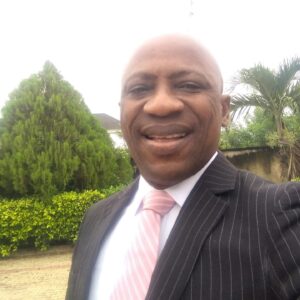
Dr Felix Babatunde Ale is a multiple merit awards winning Journalist, Leading Science Writer and Communicator in Africa.