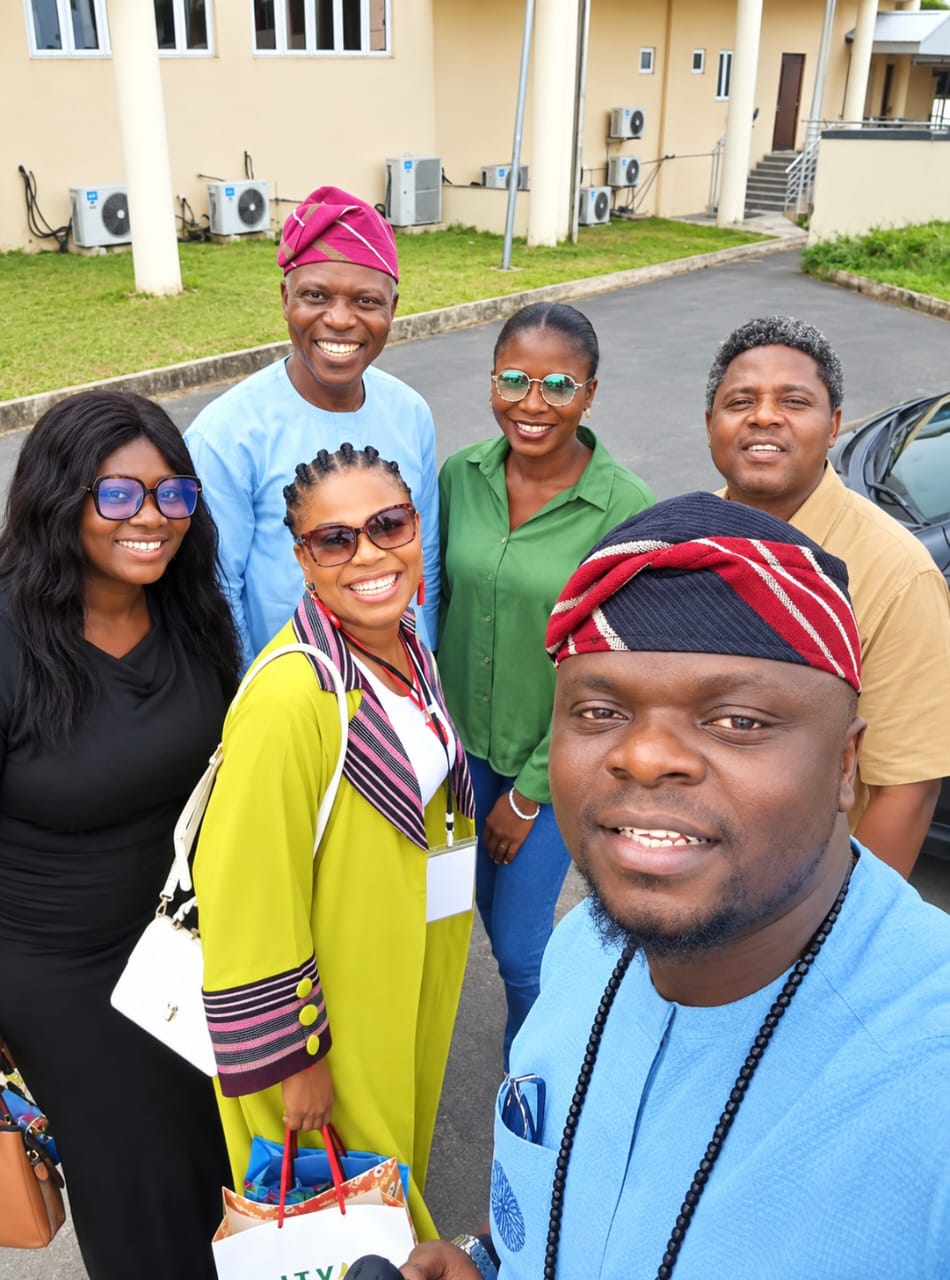
How Alamoke Akewi Called Me “Ọmọ Ẹgbẹ̀dẹ Fẹ́rẹ́ Bí Ẹkùn” at the Ekiti @30 Future Summit
By Femi Alufa
Sometimes, a single sentence can transport you across centuries. A few words, spoken by someone you are meeting for the first time, can awaken ancestral memories, reconnect you with your roots, and remind you that your identity is far bigger than your name.
That was precisely what happened to me on Wednesday, 7 October 2026, at the Ekiti @30 Future Summit in Ado-Ekiti.
When Ms Susan Titilayo Bamigboye, popularly known as Alamoke Akewi, turned towards me and declared, “Ọmọ Ẹgbẹ̀dẹ Fẹ́rẹ́ Bí Ẹkùn,” I was overwhelmed with emotion.
For a moment, I was transported from the bustling atmosphere of the summit into the depths of my family history. It was as though an ancestral voice had suddenly called my name.
I felt spellbound. I felt nostalgic. Above all, I felt happier than a king!
But why did those few words mean so much to me? To understand my emotions, one must first appreciate the remarkable woman who uttered them and the centuries-old genealogy hidden within that family cognomen.
ALAMOKE AKEWI: A CUSTODIAN OF EKITI CULTURAL HERITAGE
Ms Susan Titilayo Bamigboye, alias Alamoke Akewi, is an Ekiti chanter and one of the creative artistes using her God-given talent, cultural knowledge and intellectual energy to promote Ekiti heritage to the world.
I had been one of her virtual friends and silent admirers on Facebook, WhatsApp and other social media platforms. I appreciated her performances and her remarkable knowledge of traditional Ekiti praise poetry, particularly the Oríkì associated with different towns, communities and families.
However, we had never met physically until that memorable Wednesday at the Obafemi Awolowo Civic Centre, Ado-Ekiti, the venue of the Ekiti @30 Future Summit.
The occasion marked another significant moment in the history of our beloved Ekiti State, created out of the former Ondo State on 1 October 1996.
Little did I know that, beyond the speeches, networking and celebrations, the event would give me an unforgettable encounter with my ancestral identity.
EKITI @30: CELEBRATING THE PAST, CREATING THE FUTURE
The Ekiti @30 Future Summit brought together distinguished sons and daughters of Ekiti State from home and the diaspora.
It was a convergence of political leaders, traditional rulers, professionals, entrepreneurs, academics, cultural advocates, young people and other stakeholders united by a common aspiration: to celebrate the past and shape a more prosperous future for the land of our birth and pride, fondly known as the Land of Honour.
I arrived early enough to witness some of the day’s memorable proceedings.
The goodwill messages delivered by His Imperial Majesty, Oba Dr Rufus Adeyemo Adejugbe Aladesanmi III, CON, JP, the Ewi of Ado-Ekiti, and His Imperial Majesty, Oba Dr Joseph Adebayo Adewole, JP, OFR, Arojojoye II, the Owa Ajero of Ijero Kingdom, were among the highlights of the opening proceedings.
Both traditional rulers represent important institutions in the historical and cultural development of Ekiti State.
Governor Biodun Abayomi Oyebanji subsequently delivered his keynote address, reflecting on Ekiti’s journey and the opportunities, choices and responsibilities that will shape its future.
It was a heartwarming speech from a governor whose personal history is closely connected with the struggle for the creation of the state.
Before becoming governor, BAO served as Secretary of the Council for the Creation of Ekiti State, an organised movement led by Chief Deji Fasuan and other prominent Ekiti patriots who championed the aspiration for a separate state.
Their efforts contributed to the eventual creation of Ekiti State on 1 October 1996, following the announcement by the then Head of State, General Sani Abacha.
The contribution of Ekiti traditional rulers to the agitation also deserves recognition. Their leadership, particularly that of the Ewi of Ado-Ekiti and other royal institutions, formed an important part of the broader movement for state creation.
Thirty years later, we owe these patriots and traditional institutions a debt of gratitude for their contributions to the Ekiti cause.
THE PATH TO EKITI GREATNESS
Another major highlight was the presentation by Dr Tunji Olowolafe, a businessman, investor and native of Are-Ekiti who serves as Chancellor of Ekiti State University, Ado-Ekiti.
His presentation, titled “The Path to Ekiti Greatness: Opportunities, Choices and Imperatives for the Next 30 Years,” challenged stakeholders to think beyond the celebration of the past and focus on building a stronger future.
Other contributors included Otunba Wanle Akinboboye, Engr. Michael Oluwagbemi, Dr Muyiwa Igbalajobi and other distinguished panelists.
Their discussions explored agriculture, information and communication technology, innovation, education, tourism and the creative industries.
The conversations offered valuable insights into the possibilities available to Ekiti State if its human resources, intellectual capital, cultural heritage and entrepreneurial energy are properly harnessed.
The announcement of the winners of the Ekiti at 30 Essay Competition by Senator Babafemi Ojudu, Co-Chairman of the Ekiti State at 30 Planning Committee, was another memorable feature of the event.
Indeed, it was a significant occasion for a state reflecting on three decades of development while looking towards the next thirty years.
NETWORKING, OLD FRIENDSHIPS AND NEW ACQUAINTANCES
Before leaving the venue, I took time to greet some of the leaders, mentors and acquaintances I had come to meet.
Among them were Senator Babafemi Ojudu and Ambassador Wale Ojo-Lanre, alongside several other personalities.
I also reconnected with old friends and established new relationships.
One particularly interesting encounter occurred while I was discussing with my childhood friend, Adesina Adetola of Ikoro-Ekiti, Convener of Ekiti Future Agenda (EFA).
We met Mr Segun Akande, a native of Ipoti-Ekiti and the African Action Congress (AAC) governorship candidate in the 2026 Ekiti election. Our brief conversation touched on Ekiti politics, youth development, value orientation and other issues affecting the future of our state.
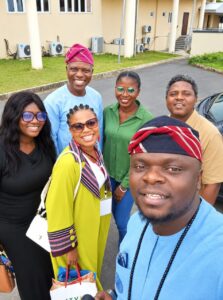
We were subsequently joined by an Ijero-Ekiti princess, Mrs Adetoun Agboola, Special Adviser to the Ekiti State Governor on Special Education, who took photographs with us.
Shortly afterwards, a group of young Ekiti creative artistes led by Goroso Ekiti, an indigene of Ikere-Ekiti, approached us.
We exchanged pleasantries, shared telephone numbers and took photographs to commemorate our participation in the celebration of our beloved state.
It was a day filled with history, friendship, networking and renewed hope for Ekiti.
Yet, unknown to me, the most memorable moment of the day was still waiting.
“ỌMỌ ẸGBẸ̀DẸ FẸ́RẸ́ BÍ ẸKÙN!”
While I was interacting with my Ekiti kinsmen, some of whom I was meeting physically for the first time, introductions were made.
When I introduced myself as Femi Alufa, Alamoke Akewi turned towards me and welcomed me with a remarkable expression:
“Ọmọ Ẹgbẹ̀dẹ Fẹ́rẹ́ Bí Ẹkùn!”
I was stunned.
How on earth did she know my family cognomen?
I knew that Alamoke Akewi possessed an impressive repertoire of Ekiti Oríkì, including the praise poetry of many towns and villages. I had admired her cultural performances from a distance.
But hearing her invoke my own ancestral cognomen, one deeply connected with my paternal genealogy, was an entirely different experience.
It was not merely an entertainer recognising a name. It was a moment in which my family history appeared to come alive through the voice of a cultural custodian.
Alamoke Akewi, I hail you!
You are doing wonderfully well with your God-given talent.
Those words meant much more to me than an ordinary greeting. They opened a window into the history of my paternal ancestors and their connections with Ado-Ekiti, Igede-Ekiti and Ijero-Ekiti.
To explain why, permit me to take you through the ancestral story behind that cognomen.
FROM EWI GBERUBIOYA TO ẸGBẸ̀DẸ FẸ́RẸ́ BÍ ẸKÙN
According to the family genealogy I have been documenting, my ancestral narrative reaches back to Ewi Gberubioya, identified in the tradition as the thirteenth Ewi of Ado-Ekiti, whose reign is dated to 1630–1696.
Family and local historical accounts associate him with an extensive royal household and a large number of descendants, some of whom became connected with other Ekiti kingdoms and settlements.
Among the princes associated with this tradition was Okunbusi, who is remembered in our genealogy as the first prince of the Ewi of Ado-Ekiti to become the Onigede of Igede-Ekiti.
Other descendants attributed to the same royal household include Adubienu, associated with the Alawo of Awo-Ekiti, and Amujoye, associated with the Onigbemo of Igbemo-Ekiti.
These ancestral connections form part of the historical traditions through which families preserve memories of migration, royal relationships and the establishment of communities.
The tradition also recalls the relationship among the royal houses of Ado-Ekiti, Ikole-Ekiti and Ijero-Ekiti through Olori Eyemode, whose story connects the royal histories of the three kingdoms.
Such accounts deserve careful documentation and comparison with independent historical sources, especially where dates, royal successions and relationships across several centuries are concerned.
For me, however, the most immediate connection is the lineage preserved in my paternal family tradition.
Ewi Gberubioya begot Prince Okunbusi; Prince Okunbusi begot Egbede fere bi Ekun.
That is the ancestral connection at the heart of the cognomen Alamoke Akewi recited.
THE JOURNEY FROM IGEDE-EKITI TO IJERO-EKITI
According to our family account, Egbede fere bi Ekun begot Alegbeleye, who was married to Areola. Both are remembered in the family tradition as being associated with Igede-Ekiti.
Their children included Olaomu and her sister, Olosunde, who married Ayegbusi of Aramoko-Ekiti.
The story of Olaomu occupies a special place in our family history.
After a prolonged period of childlessness in her native Igede-Ekiti, family tradition recounts that an Ifa priest advised her to journey to a royal town of her choice.
She travelled to Ijero-Ekiti, where she made an offering at the Esu Atakumosa shrine near the palace of the Ajero.
According to the oral account, palace guards encountered her during the night. By the following morning, Ajero Obaleyakin had become involved in her story, and she subsequently conceived.
In the ninth month, she gave birth to a daughter whom she named Aladewemimo, a name interpreted in the family tradition as an expression of gratitude for deliverance from childlessness. The name was shortened to Aladewe.
Aladewe later married Chief Osho Adekuujale, the Olomese of Ijero-Ekiti, who is remembered in our genealogy as a son of Saade Aboligigbeti of the Opeeleke clan.
Their union produced five children, among whom were Adegunwa Otoki, remembered as the patriarch of the Otoki family; Erinle Osho Alufa, the patriarch of the Alufa family; and Ajayi Osigba Olode, who later became the Saade of Ijero-Ekiti.
The latter is also remembered in the family narrative as the maternal grandfather of Chief Akin Omoboriowo, former Deputy Governor of the old Ondo State.
My own paternal genealogy continues through Pa Erinle Osho Alufa, also known as Sanmori Oko Ajiwe, whose descendants included my grandfather, Fatokun.
My father was Pa Bamidele Fatokun Alufa.
This is the ancestral journey that gives the words of Alamoke Akewi their personal significance: a story connecting royal traditions, family migration, marriage, settlement and successive generations.
It is a story that I have a responsibility to document, preserve and, wherever possible, corroborate through historical records and further genealogical research.
THE ORÍKÌ: A LIVING ARCHIVE OF FAMILY IDENTITY
The family cognomen associated with Egbede fere bi Ekun has been preserved through the following Oríkì:
Ọmọ Ẹgbẹ̀dẹ Fẹ́rẹ́ Bí Ẹkùn,
Ọmọ Alegbeleye, Ọmọ Areola,
Ọmọ Osuhan tẹ̀gbẹ̀, tẹ̀gbẹ̀,
Ọmọ Ọbí Igede, Ọmọ arẹ̀kàn b’Osun,
Ọmọ Elẹ́mí ní Igede,
Aba díẹ̀yẹ̀ sẹ̀rẹ̀kẹ́,
Mọ̀ ń bẹ Ọbí Igede kí ẹ hun mi l’adìẹ sín,
Hin hun in sín, Ẹyẹ Omi.
These verses are reproduced from the family version of the cognomen. Their wording, pronunciation and interpretation deserve further linguistic documentation with knowledgeable elders and traditional custodians.
Like many Yoruba family praise poems, the Oríkì is more than a collection of poetic expressions. It can preserve names, ancestral associations, memories of places, family relationships and cultural references that may not be fully represented in written records.
Some verses may also contain archaic expressions whose meanings require careful interpretation.
This is why the documentation of family cognomina is important. When properly recorded and studied, these oral traditions can provide valuable leads for historical and genealogical research.
They are not substitutes for historical verification; rather, they are essential sources to be preserved, interpreted and compared with other available evidence.
For a genealogist, a family cognomen can become the starting point for a much wider investigation into identity, migration, kinship and collective memory.
For a family, it can be a living connection between the generations.
And for a people, it can help sustain cultural continuity in a rapidly changing world.
LIKE A BLIND MAN WHO RECEIVED HIS SIGHT
My feelings at that moment reminded me of the biblical account of the blind man who cried out to Jesus, the Son of David, near Jericho and received his sight (Luke 18:35–43).
The comparison is not about equating my experience with a biblical miracle. Rather, it captures the emotion of suddenly seeing something that had been present all along but had acquired a fresh and deeper meaning.
I already knew my family history. I had spent time studying and documenting my ancestry.
Yet, hearing Alamoke Akewi recite my paternal cognomen so spontaneously, in the midst of a major public gathering, gave that history a new emotional force.
It was as though the past had reached into the present to remind me of who I am and where I come from.
That was the moment I became spellbound.
That was the moment I felt deeply nostalgic for my roots.
And that was why I felt happier than a king!
OUR ANCESTRY IS A BLESSING
My encounter with Alamoke Akewi at the Ekiti @30 Future Summit has reinforced a lesson I have long cherished as a historian and genealogist.
Our genealogy is a heritage blessing. Our Oríkì is a living expression of identity. Our history is a legacy that deserves to be preserved and passed from one generation to another.
We must not allow our family histories, ancestral names, praise poems and oral traditions to disappear simply because the elders who carry them are no longer with us.
We must record their stories, identify their sources, preserve their words and make them accessible to younger generations.
This is one of the motivations behind my work in genealogy and heritage documentation through Ancestora Limited.
At Ancestora, we believe that every family has a story worth investigating, every lineage deserves responsible documentation, and every generation has a duty to preserve its heritage for those yet unborn.
The encounter also reminded me that cultural custodians such as Alamoke Akewi perform an important service to society. Through their voices, knowledge and artistic expressions, they help keep alive traditions that might otherwise fade from public memory.
Thank you, Alamoke Akewi, for reminding me of my roots in a way I will never forget.
You made my day. You honoured my ancestors. You rekindled my pride in my heritage.
And, above all, you made me happier than a king!
Femi Alufa is a historian, genealogist and heritage researcher.
He is the Chief Executive Officer of Ancestora Limited, a genealogy and heritage research company committed to preserving family histories, strengthening cultural identity and documenting ancestral legacies.