KIRIJI PEACE CITY: A 21ST-CENTURY PAN-YORUBA GLOBAL VISION
…From the Battlefield to a Global Symbol of Peace, Kiriji Finally on the Global Stage….
By Femi Alufa
Introduction: From the Battlefield to a Global Symbol of Peace
For generations, the story of the Kiriji War has occupied a significant place in the historical memory of the Yoruba people. This defining nineteenth-century conflict tested the resilience of Yoruba communities, reshaped relationships among kingdoms and left enduring lessons about political rivalry, power, identity, resistance, reconciliation and the necessity of peace.
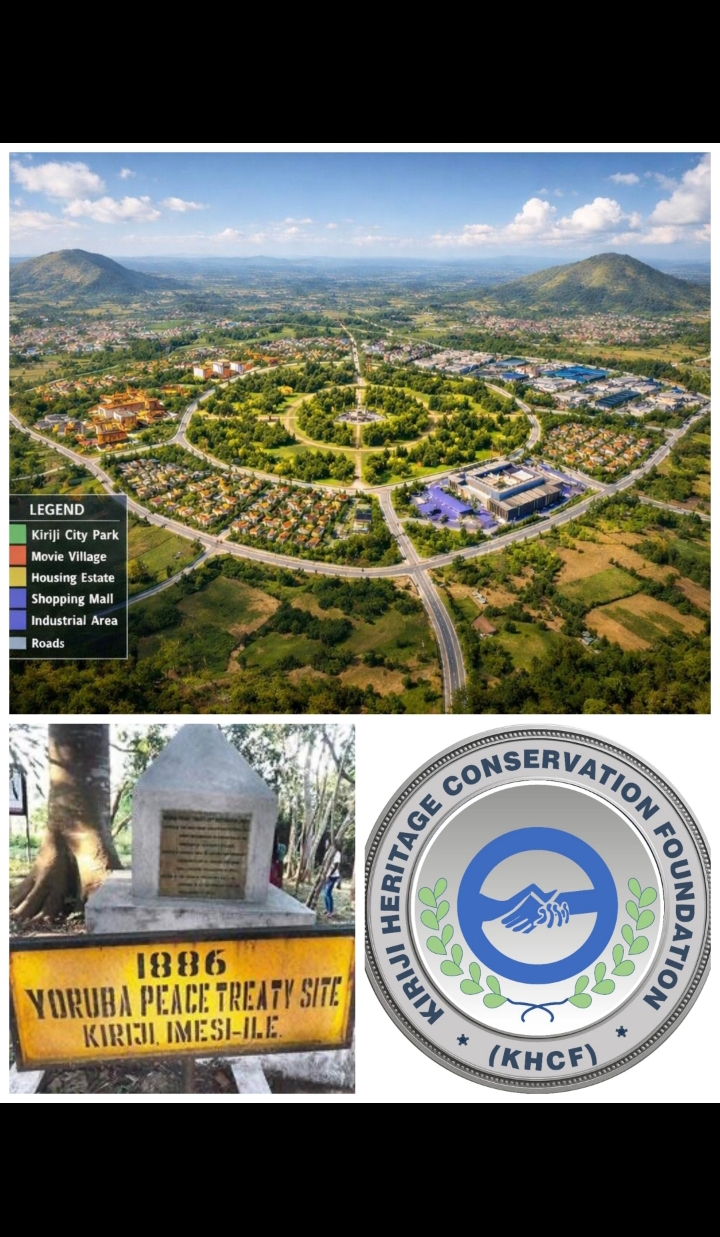
Today, as we commemorate 140 years since the historic peace settlement of Thursday, 23 September 1886, associated with Kiriji at Imesin Ipole, now Imesi-Ile, a new chapter is emerging in the history of Kiriji.
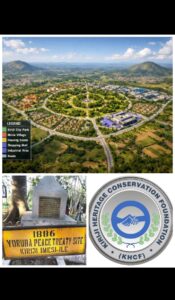
The vision is ambitious but attainable: to transform the historical geography of the Kiriji War into a living heritage landscape dedicated to peace, historical preservation, cultural tourism, research, education, community development and Pan-Yoruba unity.
At the heart of this vision is the proposed Kiriji Peace Park, with the long-term aspiration of establishing Kiriji Peace City—a twenty-first-century heritage and peacebuilding initiative connecting historically significant locations associated with the war and its eventual settlement.
This is not merely a proposal to commemorate a war. It is a call to transform the memory of conflict into an enduring institution for peace, knowledge, reconciliation and development.
It is a vision of a Yoruba heritage destination that speaks not only to the Yoruba people of Nigeria but also to Yoruba descendants and people of African heritage across the world, both at home and in the diaspora.
Through the collective efforts of the Kiriji Heritage Conservation Foundation (KHCF), the aspiration is to bring Kiriji out of the margins of historical consciousness and place it firmly on the global stage.
Kiriji must no longer be remembered only for the war that divided communities, but also for the peace that opened a pathway to reconciliation.
*The Historical Foundation of the Vision*
To appreciate the proposed Kiriji Peace City, it is important to understand the historical geography of the conflict.
The Kiriji War, also known as the Ekiti-Parapo War, was one of the most consequential conflicts in nineteenth-century Yorubaland. Conventionally dated from 1877 to 1893, it involved complex political, military and territorial struggles among Yoruba states and communities during a period of considerable instability.
The signing of the Kiriji Peace Treaty on 23 September 1886 marked a major milestone in the peace process, although the wider conflict and its political consequences continued beyond that date. The period culminated in the expansion and consolidation of British colonial control over Yorubaland in the early 1890s.
The history of Kiriji cannot be reduced to a single cause or individual. The relationships among kingdoms, the actions of military leaders, the experiences of affected communities and the negotiations that produced the 1886 settlement all deserve careful historical examination.
Three geographical locations provide an important starting point for the proposed Kiriji heritage corridor: Igbajo, Imesi-Ile and Okemesi-Ekiti.
Together, they offer an opportunity to interpret the conflict through its military history, political origins, community experiences and eventual pursuit of peace.
The proposed corridor would not exclude other historically relevant communities. Rather, these three locations would serve as initial geographical anchors for a broader heritage initiative developed through historical research, community consultation and cooperation among the relevant stakeholders.
*Igbajo: Remembering the Oyo Military Presence*
The first proposed geographical anchor is Igbajo, historically associated with the Oyo military presence during the conflict and with Aare Obadoke Asubiaro Latoosa, the celebrated Ibadan military leader.
The proposed heritage initiative would recognise Igbajo’s place in the wider military history of the Kiriji conflict and the political struggles that shaped nineteenth-century Yorubaland.
Through historical markers, interpretive exhibitions, archival research and educational programmes, the location could contribute to a deeper understanding of the military forces, leadership structures and political circumstances of the period.
The objective is not to glorify warfare but to explain its historical realities, preserve the memory of affected communities and communicate the lessons the conflict offers future generations.
Igbajo would therefore contribute an essential dimension to the proposed heritage corridor: an opportunity to examine the military and political circumstances of the conflict within their wider Yoruba historical context.
*Imesi-Ile: The Theatre of War and the Cradle of Peace*
The second, and arguably most significant, anchor of the proposed initiative is Imesi-Ile, historically associated with the prolonged conflict and the peace settlement of Thursday, 23 September 1886.
The treaty’s association with Imesi-Ile gives the community a distinctive place in the historical narrative of reconciliation in Yorubaland. It offers an opportunity to position the town as a major centre for the study and commemoration of indigenous peacebuilding and diplomacy.
The proposed Kiriji Peace Park would place this legacy at the centre of a renewed public conversation about dialogue, negotiation, political accommodation and peaceful coexistence.
The park could feature a peace monument, a treaty memorial, historical interpretation centres, research facilities, educational exhibitions and spaces for commemorative ceremonies.
It could also host annual peace lectures, historical conferences, cultural festivals and programmes bringing together traditional rulers, scholars, public officials, community leaders, young people and members of the Yoruba diaspora.
Imesi-Ile would thus become more than a location associated with a historic treaty. It could become a place where the principles of peace are actively taught, discussed and practised.
The vision is to make the significance of the 1886 settlement accessible to people who may never have studied the Kiriji War but who understand the universal importance of resolving conflicts through dialogue.
Of particular importance is the heritage landscape associated with the Kiriji trenches, battle sites, Ogedengbe’s High Command and the Owa Ooye Palace Square. Together, these historical features offer considerable potential for documenting the military, cultural and diplomatic dimensions of the conflict.
With systematic historical research, archaeological assessment where appropriate, professional conservation, community participation and a credible heritage management plan, Imesi-Ile could explore the possibility of seeking international heritage recognition, including assessment against relevant UNESCO World Heritage criteria.
Such recognition would require compliance with the appropriate national and international procedures. Nevertheless, the historical significance attributed to the area provides a compelling reason to begin documenting, conserving and interpreting its heritage.
The objective should be to preserve this historical landscape not merely as a reminder of war, but as a lasting testimony to the human capacity to pursue peace after prolonged conflict.
*Okemesi-Ekiti: Preserving the Memory of the Conflict’s Origins*
The third anchor is Okemesi-Ekiti, historically connected with the events surrounding the emergence of the Ekiti-Parapo resistance and the early stages of the conflict.
The historical narrative frequently associates Prince Fabunmi Adesoye Oraralada of Imesi-Igboodo, now Okemesi-Ekiti, with events that helped ignite the conflict in 1877.
His role and the circumstances surrounding the outbreak of hostilities deserve careful historical documentation through oral traditions, written accounts, archival materials and other available evidence.
The proposed heritage initiative would preserve Okemesi-Ekiti’s place in the wider story of the Kiriji War, ensuring that future generations understand the circumstances that contributed to the conflict rather than remembering only its military leaders and eventual settlement.
Historical interpretation at this location could examine political tensions, traditional institutions, community experiences and competing interests that shaped the conflict.
It would also help establish a more comprehensive understanding of the historical connections among Okemesi-Ekiti, Imesi-Ile, Igbajo and other communities associated with the war.
Together, these three locations provide an initial geographical framework for a wider heritage vision. Their development would depend on further historical research, consultations with host communities, appropriate land arrangements and the agreement and participation of relevant traditional and public authorities.
*Kiriji Heritage Conservation Foundation: Building the Institutional Foundation*
A vision of this magnitude requires more than enthusiasm. It requires an organised institution capable of mobilising people, preserving historical evidence, building partnerships and pursuing long-term objectives.
This is the rationale behind the establishment and activities of the Kiriji Heritage Conservation Foundation (KHCF).
The Foundation provides an institutional platform for advancing the preservation, interpretation and promotion of the heritage associated with the Kiriji War and Peace Treaty.
Its work is rooted in the conviction that history should not remain confined to books, private recollections or the memories of ageing custodians. It should be preserved, interpreted and made accessible to new generations through credible research, public education, cultural documentation and sustainable heritage initiatives.
KHCF’s vision extends beyond commemorating historical anniversaries. It seeks to build a lasting framework through which the history of the Kiriji conflict and its peaceful settlement can contribute to contemporary discussions about peacebuilding, traditional institutions, cultural identity and community development.
The Foundation’s objectives can be organised around six complementary priorities.
*1. Historical Preservation and Documentation*
To encourage credible research into the Kiriji War, the Ekiti-Parapo movement, Kiriji prosopography, principal participants, affected communities and the 1886 Peace Treaty.
This includes documenting oral histories, family traditions, historical sites, archival materials and the genealogies of relevant historical personalities.
*2. Establishment of Kiriji Peace Park*
To mobilise traditional institutions, host communities, governments, cultural organisations, historians, philanthropists and development partners towards establishing a permanent memorial landscape dedicated to the history of the conflict and the achievement of peace.
*3. Development of Kiriji Peace City*
To pursue the long-term development of a connected heritage corridor linking Igbajo, Imesi-Ile and Okemesi-Ekiti, with the possibility of extending the initiative to other historically relevant locations.
*4. Research, Education and Knowledge Production*
To promote historical scholarship, public lectures, publications, exhibitions, conferences, digital archives and educational programmes that make the history of Kiriji accessible to students, researchers and the wider public.
*5. Cultural Tourism and Community Development*
To explore sustainable opportunities for heritage tourism, local enterprise, employment, hospitality, cultural festivals and community-based economic development.
*6. Pan-Yoruba and Diaspora Engagement*
To build relationships among Yoruba communities, traditional institutions, professionals, academics, cultural organisations and descendants of Yoruba heritage across Nigeria and the international community.
These objectives are interconnected. Historical documentation provides intellectual credibility; community participation builds legitimacy; institutional partnerships provide technical support; and sustainable financing makes implementation possible.
The Foundation’s success will depend on its ability to translate these objectives into practical programmes supported by clear governance structures, measurable targets and accountable implementation.
*From Kiriji Peace Park to Kiriji Peace City*
The proposed Kiriji Peace Park represents the immediate heritage ambition, while Kiriji Peace City is the larger, long-term vision.
The distinction is important.
A peace park can provide a defined location for commemoration, historical interpretation, education and reflection. A peace city, however, would require a more extensive framework of planning, infrastructure, governance, investment and cooperation among participating communities and public authorities.
Kiriji Peace City should therefore be understood as a heritage-led development vision, rather than merely a physical monument or a new urban settlement.
Its geographical concept would connect three important historical anchors:
– Igbajo: The military and political history associated with the Oyo presence during the conflict.
– Imesi-Ile: The historical theatre of war and the location associated with the signing of the 1886 Peace Treaty.
– Okemesi-Ekiti: The community associated with the early history of the conflict and the Ekiti-Parapo resistance.
At its core, the initiative would tell one connected historical story: the circumstances that led to conflict, the experiences of the people who endured it, the leaders and institutions involved, and the eventual achievement of peace.
The proposed corridor could eventually accommodate heritage monuments, museums, research centres, cultural and educational facilities, commemorative spaces, visitor services and other appropriate community development projects.
Its implementation would need to proceed through historical and archaeological research where appropriate, community consultations, feasibility studies, environmental assessments, land agreements, professional planning and the participation of relevant governments and traditional institutions.
It would also require a sustainable funding model that combines public investment, philanthropy, responsible private-sector participation, cultural grants and diaspora engagement.
The goal is to create an enduring heritage asset that serves both the memory of the past and the needs of present and future generations.
*Kiriji at 140: The Opportunity to Think Globally*
The 140th anniversary of the 1886 Peace Treaty provides a powerful opportunity to renew international interest in Kiriji.
Anniversaries can easily become ceremonial occasions that end when the speeches are concluded and the guests depart. The greater opportunity is to use commemoration as a foundation for permanent institutions, documented history, international partnerships and practical development.
The Kiriji story deserves to be presented within wider conversations about conflict resolution, traditional diplomacy, peace agreements and the preservation of cultural memory.
Across the world, communities have transformed places associated with conflict into memorials, museums and educational destinations. Kiriji offers an opportunity to pursue a comparable heritage ambition while remaining firmly grounded in Yoruba historical experience and local community priorities.
Its significance should be communicated through books, documentaries, academic publications, exhibitions, digital archives, educational resources and international cultural exchanges.
The Yoruba diaspora should be central to this effort.
Yoruba descendants and people of Yoruba heritage across Africa, Europe, the Americas and other parts of the world can contribute knowledge, professional expertise, resources and international networks.
Digital technology can make the historical record accessible beyond geographical boundaries, enabling researchers, students, families and diaspora communities to explore the people, places and events associated with the Kiriji War.
This is where historical research and digital heritage preservation become particularly important. A well-organised digital archive could document the biographies, genealogies, oral histories and historical contributions of warriors, peacemakers, traditional rulers and affected communities.
Such a resource would deepen historical understanding while helping younger generations connect with their ancestral heritage.
The ultimate ambition is for Kiriji to become internationally recognised not merely as the name of a nineteenth-century conflict, but as a historical reference point for the transformation of conflict into peace.
*The Trustees of KHCF: Custodians of a Collective Responsibility*
Every enduring institution requires responsible leadership, a clear sense of purpose and a commitment to accountability.
The trustees of the Kiriji Heritage Conservation Foundation carry an important responsibility in advancing the Foundation’s mission and safeguarding its long-term objectives.
Their responsibility is not simply to preserve the memory of the past. It is also to help build an institution capable of translating that memory into credible research, public education, community engagement and sustainable heritage development.
The Foundation’s trustees must provide the institutional direction necessary to develop the proposed Kiriji Peace Park and advance the long-term vision of Kiriji Peace City.
This includes supporting historical accuracy, transparent governance, responsible fundraising, constructive engagement with host communities and partnerships with traditional institutions, governments, universities, cultural organisations and international heritage bodies.
*The members of the KHCF Board of Trustees and its leadership team are:*
1. Dr Florence F. Adeoye — President
2. Mr Joseph Abayomi Aworeni — Vice President
3. Arc. Rotimi Fafowora — Secretary-General
4. Hon. Ralph Elebute — Deputy Secretary-General
5. Prof. Soji Adejumo — Trustee
6. Prof. Raymond Ogunade — Executive Member
7. Hon. Femi Alufa — Executive Member
8. Dr Toyin Ogundeji — Executive Member
9. Prof. Mrs Olubukola Oyawoye — Consultant
The contributions of these individuals, both individually and collectively, deserve recognition as part of the institutional history of the Foundation and the continuing effort to advance the Kiriji Peace City vision.
At the same time, the success of Kiriji Peace City must never depend on a handful of individuals alone. It must become a shared undertaking whose continuity is sustained by institutions, communities and generations of committed participants.
The trustees’ enduring legacy will ultimately be measured by the strength of the institutions they help build, the historical resources they help preserve and the opportunities they create for future generations.
*An Open Invitation to Yoruba Sons and Daughters Worldwide*
The vision of Kiriji Peace City is too important to be confined to one community, one generation, one organisation or a small circle of individuals.
It belongs to everyone who believes that our history deserves preservation, that our cultural inheritance should be passed on to future generations, and that the lessons of the past can help build a more peaceful future.
Accordingly, the Kiriji Heritage Conservation Foundation should continue to welcome the participation of well-meaning Yoruba sons and daughters, both at home and abroad, who are willing to contribute to the realisation of its objectives.
Membership expansion should be guided by clear criteria, a transparent process and a commitment to the Foundation’s mission.
The initiative can benefit from the participation of historians, genealogists,