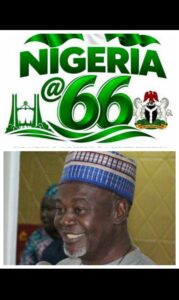
NIGERIA @ 66: FROM IMPOSSIBILITY TO PROSPERITY
By Femi Alufa
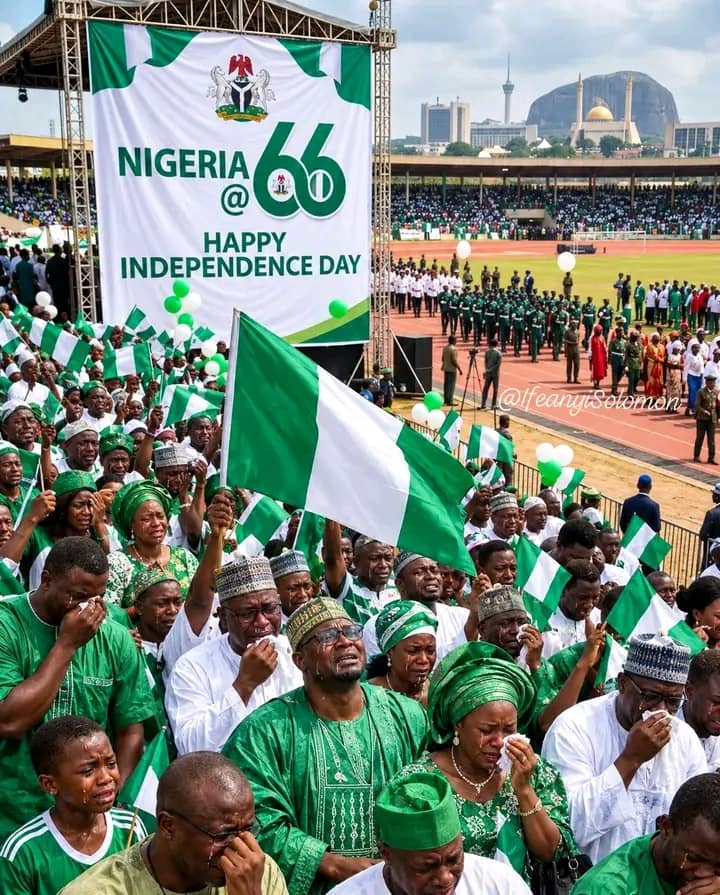
Sixty-six years after independence, Nigeria does not lack possibilities. What we lack is the consistent ability to convert those possibilities into better lives for ordinary Nigerians.
The Nigeria we desire should not be an abstract dream.
It should be a country where a young graduate can find meaningful work without having to leave home to find a future; where a farmer can produce more and earn more because electricity, roads, storage and agro-processing exist around him; where manufacturers can operate with reliable power and move their goods efficiently from factory to market; where children receive quality education regardless of where they are born; where hospitals can provide dependable care; where families have access to clean water, sanitation and decent housing; and where citizens can travel, work and conduct their businesses in safety.
It should be a Nigeria where hard work has a reasonable chance of producing progress.
That is what prosperity should mean.
Not simply a larger economy on paper, but an economy that creates productive jobs, raises household incomes, expands opportunity, rewards enterprise and enables citizens to live with dignity.
It is also a Nigeria in which our young population is not treated merely as a social burden, but developed as our greatest economic asset—through education, technical skills, digital competence, entrepreneurship, research and innovation.
It is a Nigeria that produces more of what it consumes, processes more of what it produces and exports more finished goods to Africa and the world.
It is a Nigeria where government works: where public money produces public value, infrastructure is maintained, institutions are respected, laws are predictable and citizens can hold those entrusted with public responsibility accountable.
This is the Nigeria I believe is possible.
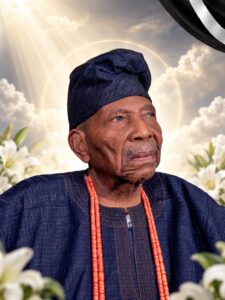
And on this 66th Independence Day, I find myself thinking about one Nigerian whose life offers a powerful lesson in how possibility can become reality: Aare Afe Babalola, SAN, OFR, CON.
His story is more than the biography of a remarkable lawyer, educationist, farmer, philanthropist and institution-builder. It is a story about what becomes possible when vision is matched by discipline, hard work, faith, perseverance and service—and when personal achievement is transformed into opportunity for others.
From a modest background, Aare Afe Babalola educated himself through private study, qualified as a lawyer in England and Wales in 1963, became a Senior Advocate of Nigeria in 1987, and built a distinguished legal career.
But his greatest lesson for Nigeria may not be what he achieved for himself. It is what he built beyond himself.
From a one-man law practice in a rented “one room and parlour” in Adamasingba, Ekotedo, Ibadan, he went on to build institutions and invest in people through education, agriculture, healthcare, philanthropy and community development. Through Afe Babalola University, Ado-Ekiti, and his wider initiatives, his philosophy has been expressed in the creation of opportunities that can outlive the individual who created them.
That is the connection between “Impossibility Made Possible” and “From Impossibility to Prosperity.”
The lesson is not that every Nigerian must follow the same path as Aare Babalola.
The lesson is that Nigeria must create the conditions in which millions of Nigerians can fulfil their own potential.
If one individual can transform humble beginnings into enduring institutions, what could Nigeria achieve if millions of our citizens had access to quality education, reliable electricity, efficient infrastructure, security, capital, technology and a business environment that rewards productive effort?
That is the national possibility before us.
THE CALL: LET US BUILD
But possibility does not become prosperity by wishing for it.
It requires a national decision to do the work.
Government must provide the foundations: security, infrastructure, reliable public services, sound institutions, quality education and a business environment in which enterprise can flourish.
The private sector must invest, innovate, employ and build.
Our universities and schools must produce knowledge, skills and solutions—not merely certificates.
Professionals must use their expertise to solve national problems.
Farmers must be supported to become more productive.
Entrepreneurs must be enabled to build businesses that create wealth and jobs.
Civil servants must remember that public office is a responsibility, not a private entitlement.
Our religious, traditional and community leaders must help rebuild the culture of responsibility, integrity and service.
And citizens must recognise that nation-building is not something we outsource entirely to government.
Every Nigerian has a part to play.
We must begin to ask different questions.
Not only, “What can Nigeria do for me?” but also, “What can I build that will make Nigeria better for others?”
Not only, “Who is to blame?” but also, “What problem can I help solve?”
Not only, “When will Nigeria change?” but also, “What can I change within my sphere of influence today?”
This does not absolve government or institutions of their responsibilities. On the contrary, it places responsibility where it belongs while recognising that a nation is ultimately built by the combined actions of its people.
We need a national culture that celebrates those who build rather than merely those who acquire; those who create jobs rather than only seek them; those who educate rather than exploit; those who solve problems rather than profit from them; and those who leave institutions stronger than they found them.
That is where the example of Aare Afe Babalola becomes more than a personal success story.
It becomes a national challenge.
If “Impossibility Made Possible” describes what one determined Nigerian achieved through decades of work, “From Impossibility to Prosperity” must describe what we collectively choose to achieve for Nigeria.
Let this be the generation that moves from complaint to construction.
From consumption to production.
From dependence to enterprise.
From potential to performance.
From individual success to shared opportunity.
From temporary projects to enduring institutions.
From rhetoric to measurable results.
And from the Nigeria we constantly say could be to the Nigeria we deliberately build.
THE NIGERIA WE DESIRE
Let us therefore set our sights on a Nigeria where electricity supports production, where transport infrastructure connects markets, where agriculture creates wealth, where industries manufacture competitively, where technology opens new frontiers, where education develops talent, where healthcare protects human capital and where the rule of law gives citizens confidence to build their lives.
Let us build a Nigeria where a child born in a poor household can still dream without apology—and have a genuine pathway to achieve that dream.
Let us build a Nigeria where our young people see the country not merely as a place to escape from, but as a place where they can create, innovate, work and prosper.
Let us build a Nigeria where success is not an isolated privilege but a platform from which more people can rise.
And let us build it not for some distant generation, but for ourselves and those coming after us.
Aare Afe Babalola’s life reminds us that great things can emerge from unlikely beginnings.
Nigeria’s story can be the same.
The possibilities are before us.
The responsibility is ours.
The work is ours.
And the future is ours to build.
Happy Independence Day, Nigeria.
Nigeria @ 66: From Impossibility to Prosperity.
May our generation have the courage, discipline, wisdom and patriotism to turn possibility into reality—and prosperity into a shared national inheritance.
Femi Alufa is the Publisher and Chief Executive Officer of the Ekiti Summit News Media Group