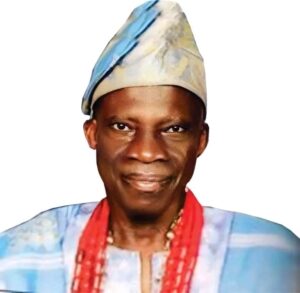
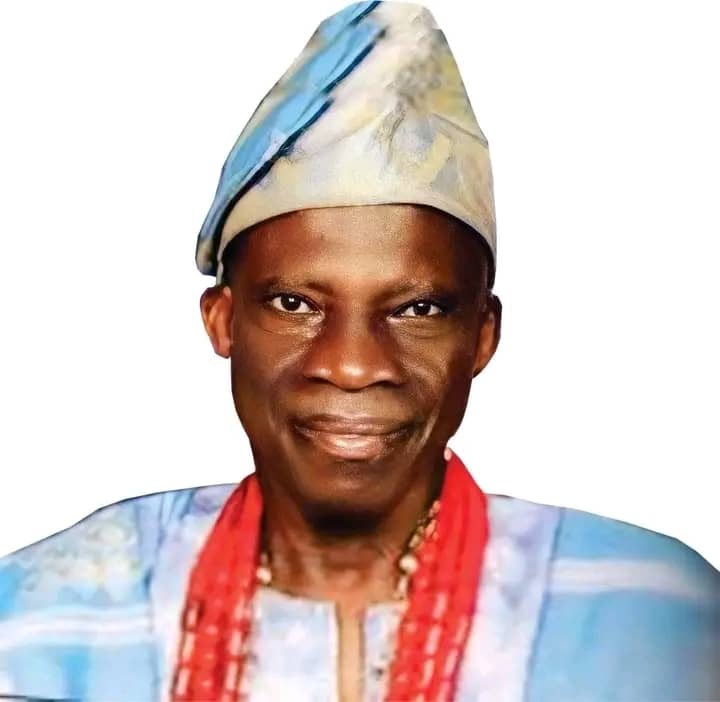
J.E. BABATOLA: EKITI PATRIOT, NATIONALIST AND POLITICAL ICON
…Second Ekiti Council of Elders Annual Lecture holds November 10 in Ado-Ekiti
By Femi Alufa
The enduring legacy of High Chief Dr. Joel Ehinafe Babatola (1918–2014), the Olora of Ado-Ekiti, will once again take centre stage as the Ekiti Council of Elders holds its Second Annual Lecture, tagged the J.E. Babatola Lecture Series, on Tuesday, November 10, 2026, in Ado-Ekiti, Ekiti State.
The distinguished lecture, organised by the Joel Babatola Annual Lecture Series (JOBAL) in conjunction with the Ekiti Council of Elders, will be delivered by Professor Dipo Kolawole, former Vice-Chancellor of Ekiti State University (EKSU), Ado-Ekiti.
The event will take place at the Pastoral Centre, Ado-Ekiti, and is expected to attract eminent traditional rulers, political leaders, academics, elder statesmen, community leaders and other distinguished personalities.
High Chief J.E. Babatola was an eminent nationalist, educationist, administrator, cooperative movement leader and frontline politician whose public career spanned the colonial era, Nigeria’s First Republic and the Second Republic.
Beginning his teaching career in the 1930s and 1940s, he rose to become a college principal before venturing into politics, where he established himself as one of the influential progressive political figures of his generation.
A trusted lieutenant of Chief Obafemi Awolowo, Babatola occupied several strategic positions in the old Western Region.
His appointments included Parliamentary Secretary and Minister responsible for Local Government Affairs, Minister of Justice (Customary Courts Division), Minister of Cabinet Office, Minister of Home Affairs and Information, and Minister of Labour.
He also served as Roving Secretary and Adviser to the Premier, participated in the London Constitutional Conference and chaired the Western Nigeria Committee for the 1960 Independence celebrations.
His political journey was characterised by remarkable resilience through the turbulent years preceding and following Nigeria’s independence. He also maintained a close relationship with the late Colonel Adekunle Fajuyi, former Military Governor of Western Nigeria.
Following the creation of the Western State in 1967, Babatola was appointed the sole Commissioner from the then Ekiti Division. He served as Commissioner for Works and Transport and subsequently as Commissioner for Trade, Industries and Cooperatives.
In 1974, he resigned from the government to return to partisan politics alongside his political leader, Chief Obafemi Awolowo.
He became one of the early registered members and leaders of the Unity Party of Nigeria (UPN) when the ban on partisan politics was lifted in 1978.
Beyond partisan politics, Babatola distinguished himself in the international cooperative movement.
In 1978, he became National President of the Cooperative Federation of Nigeria and subsequently Chairman of the Regional Council of Cooperative Federations in West Africa. He also served as Vice-Chairman in Africa and became the first Black African elected to the Board of the International Cooperative Alliance.
A passionate advocate of Ekiti interests, he played a significant role in the political developments surrounding the proposed creation of Ekiti State in 1981.
He later led the Omoboriowo political faction in its contest with the Ajasin-led establishment, believing that Ekiti deserved a stronger political voice and greater attention within the old Ondo State.
After decades of political engagement, Babatola withdrew from partisan politics following the death of Chief Obafemi Awolowo in 1987. He subsequently authored the memorable oration, Awo the Deathless, in honour of his departed political leader.
Until his death in 2014 at the age of 96, he remained a respected elder statesman and custodian of progressive political ideals.
He served as Patron of the Ekiti Council of Elders, Vice-Chairman of the Yoruba Council of Elders and Patron of the St. Andrew’s College Old Students Association, among other positions.
His life represented an enduring intersection of education, public service, political commitment, cooperative development and Ekiti identity.
The Second Annual Lecture provides another opportunity to reflect on his contributions to nation-building, democratic development, public administration and the political evolution of Ekiti State.
Friends, family members, associates, scholars and admirers of the late statesman are warmly invited to participate in the event and celebrate a legacy that continues to inspire generations.
LECTURE DETAILS
Date: Tuesday, November 10, 2026
Venue: Pastoral Centre, Ado-Ekiti, Ekiti State
Guest Lecturer: Professor Dipo Kolawole, Former Vice-Chancellor, Ekiti State University.
FEMI ALUFA is a
Media Consultant , Historical Researcher, Public Affairs and Community Relations Specialist.